Foundation Repair Companies: How to Compare Them
Foundation repair companies range from engineer-led firms to sales-driven installers. Learn the questions that separate them before you sign.

Foundation repair companies fall into three types: engineer-led, specialty installers, and general contractors. Compare three bids on the same engineer's scope, and check licence, insurance, warranty transfer, and pier count before choosing.
- Typical repair
- $4,000 - $15,000
- Major repair
- $20,000 - $40,000
- Warranty transfer fee
- $100 - $500
- Engineering report
- $400 - $1,500
- Bids to compare
- At least 3
Some links on this page are affiliate links.If you buy through them we may earn a commission at no extra cost to you. We do not accept payment for rankings. Read the full disclosure.
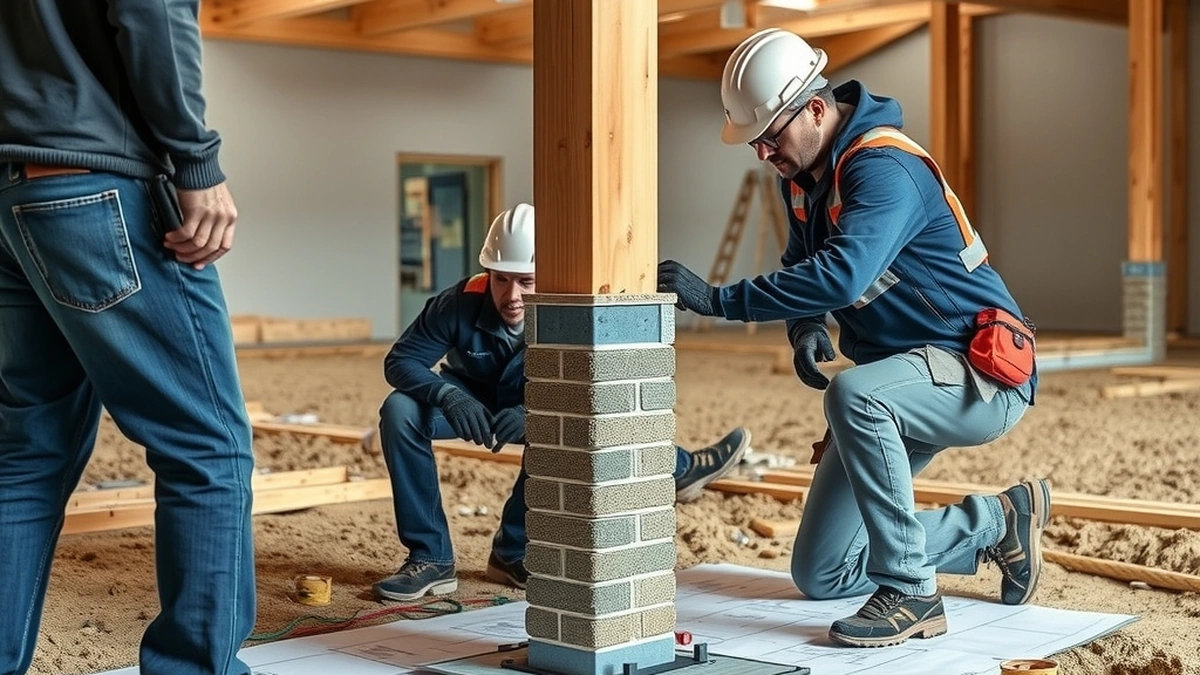
Foundation repair companies are not interchangeable, and the difference is rarely visible in a logo or a truck. Some are engineer-led firms that design and install. Some are specialty installers that follow another firm’s design. Some are general contractors who subcontract the piers. Comparing them starts with a scope you control.
The Three Kinds of Firm
An engineer-led company keeps a licensed structural engineer on staff or on retainer and produces the design in-house. You pay for the report, and the report is yours. This model tends to produce consistent scopes and fewer surprise change orders.
A specialty installer focuses on one system, usually steel piers or wall anchors, and installs to a design supplied by an outside engineer. These firms can be excellent value because they do one thing repeatedly. They can also be limited when the diagnosis points to a method they do not offer.
A general contractor manages the project and subcontracts the specialty work. That can work well on a large job that includes drainage, carpentry, and restoration alongside the foundation, but you should confirm who actually holds the licence for the structural portion.
What to Compare
| Item | Why it matters | What good looks like |
|---|---|---|
| Engineer’s report | Defines the scope | Written, stamped, yours to keep |
| Pier count and depth | Drives the price | Stated numbers, not a lump sum |
| Warranty | Protects the repair | Lifetime on piers, transferable |
| Licence and insurance | Protects you | Verified with the state and insurer |
| Payment schedule | Protects your cash | Deposit under a third, balance on completion |
| Exclusions | Prevents surprises | Restoration and permits listed |
A bid that says “foundation repair, $14,500” cannot be compared with anything. A bid that says “eight push piers at 7-foot spacing, design depth 22 feet, $1,800 each, engineering included, restoration excluded” can be compared line by line.
The Numbers That Should Appear
Most repairs run $4,000 to $15,000, and major structural work runs $20,000 to $40,000. A pier job is typically $6,000 to $30,000 because a house needs several piers, and push piers run $1,000 to $3,000 each while helical piers run $700 to $2,500 each.
If a bid lands far below those bands, count the piers. If it lands far above, look for restoration, drainage, and engineering bundled in. Neither is automatically wrong; both need explaining.
The Warranty Conversation
Ask for the warranty document, not a verbal description. Pier warranties are commonly lifetime and transferable, and the transfer fee typically runs $100 to $500. Workmanship warranties are shorter, often one to five years, and waterproofing warranties are shorter still.
Read the exclusions. Many pier warranties exclude damage caused by plumbing leaks, poor drainage, or grading changes after the repair, which means the warranty can be voided by a problem the homeowner did not know existed. Ask what maintenance the warranty requires, and put it on a calendar.
A Costed Comparison
Two bids for the same wall. Bid A proposes 8 piers at $1,700:
8 × $1,700 = $13,600
Bid B proposes 6 piers at $2,100:
6 × $2,100 = $12,600
Bid A looks $1,000 more expensive, but it includes two more piers and a design depth of 25 feet against Bid B’s 18. Per pier, Bid A is cheaper. Per foot of design depth, the comparison changes again. That is why the count and the depth have to be normalised before price means anything.
Questions That Reveal the Firm
- Who wrote the scope, and can I have a copy of the engineer’s report?
- How many piers are in the bid, at what spacing and what design depth?
- What happens if refusal comes early or late, and what is the per-foot overrun rate?
- What does the warranty exclude, and what is the transfer fee?
- Who holds the licence for the structural work, and what is the number?
- What is the payment schedule, and is the deposit held in escrow?
- Can I speak to two customers from the past two years?
Red Flags Worth Walking Away From
A same-day discount that expires when the salesperson leaves is a pressure tactic, not a price. A demand for a 50% deposit before materials are ordered is a cash-flow warning. A refusal to name the pier count is a scope warning. And a company that diagnoses a $30,000 repair from a free 20-minute visit, without measuring crack width or floor elevation, has not diagnosed anything.
National Versus Local Firms
National companies bring standardized training, call centers, and warranties that survive a franchise changing hands. They also carry overhead that shows up in the bid, and their sales staff may be paid on commission, which is worth knowing when the conversation turns to urgency. Local firms often know which inspector will review the permit and which soil conditions show up three streets over. They may also be a two-crew operation that cannot start until August.
Neither model is inherently better. Ask a national firm for the local project manager’s name and two local references, and ask a local firm for proof of insurance and a warranty that a successor business would honor. The answers separate the operators from the marketers faster than any review score.
For the hiring sequence, read how to choose a foundation contractor and questions to ask a foundation contractor. If you have already been burned, foundation repair scams covers the patterns to report.
Frequently asked questions
How do I choose a foundation repair company?
Start with an independent engineer's scope, then get three bids on that scope. Compare pier count, design depth, warranty terms, and exclusions rather than the bottom-line total.
Are national foundation repair companies better?
Not necessarily. National firms bring standard processes and strong warranties; local firms often know the soil and the inspectors. Both can do good work, and both can oversell.
What licence should a foundation company have?
Requirements vary by state. Ask for the contractor licence number, verify it with the state board, and confirm general liability and workers compensation coverage.
How much should a foundation repair warranty cover?
A pier warranty should cover the piers and the lift for the life of the structure and be transferable. Workmanship and waterproofing warranties are usually shorter, often one to five years.
Why are foundation repair quotes so different?
Quotes differ because the scopes differ. One may include eight piers and engineering, another four piers and none. Normalise the scope before comparing price.
What is a red flag with a foundation company?
A same-day discount, a demand for a large deposit, no written scope, no engineer involved, and a refusal to put warranty terms in the contract are all reasons to walk away.
Sources
Some links are affiliate links.If you buy through them we may earn a commission at no extra cost to you. We do not accept payment for rankings. Read the full disclosure.