Stem Wall Foundations: Types, Problems, and Repair Costs
A numbers-first guide to stem wall foundations, including construction, common cracks, repair methods, and what to expect to pay.
Stem wall foundations are concrete walls that elevate a structure above a footing; repairs typically range from $4,000 to $15,000, with full replacement reaching $40,000 to $150,000.
- Typical repair range
- $4,000–$15,000
- Major repair range
- $20,000–$40,000
- Full replacement range
- $40,000–$150,000
- Cosmetic crack width
- 1/16 inch or less
- Wall movement limit
- 2 inches
Some links on this page are affiliate links.If you buy through them we may earn a commission at no extra cost to you. We do not accept payment for rankings. Read the full disclosure.
Stem wall foundations are concrete walls that sit on a continuous footing and support the structure above grade. They are common in areas with expansive soils, frost lines, or sloped lots where elevating the floor framing protects the building from moisture and ground movement. Repair costs for stem wall foundations typically range from $4,000 to $15,000, though major structural work or full replacement can cost significantly more.
What Is a Stem Wall Foundation?
A stem wall foundation consists of two main parts: a concrete footing buried below the frost line and a vertical stem wall rising from that footing to support the sill plate and floor framing. The footing spreads the building load across the soil, while the stem wall transfers that load upward and keeps the wood structure away from direct ground contact.
Stem walls differ from slab-on-grade foundations, where the floor slab itself bears on the soil, and from pier-and-beam systems, which use discrete piers rather than a continuous wall. Because the stem wall is a continuous concrete element, cracks or settlement in the wall often affect the entire structure above it.
How Stem Walls Are Built
Construction begins with excavation and placement of the footing, usually reinforced with rebar. Once the footing cures, formwork is erected for the stem wall, concrete is poured, and anchor bolts are set to secure the sill plate. Typical residential stem walls range from 18 inches to 4 feet in height, depending on site elevation and local code.
Key measurements to record during construction or inspection include:
- Footing width and depth below grade
- Stem wall thickness, commonly 6 to 10 inches
- Vertical rebar spacing and size
- Anchor bolt diameter and embedment depth
These dimensions matter later because repair methods are sized to the wall’s existing cross-section and load path.
Common Problems With Stem Walls
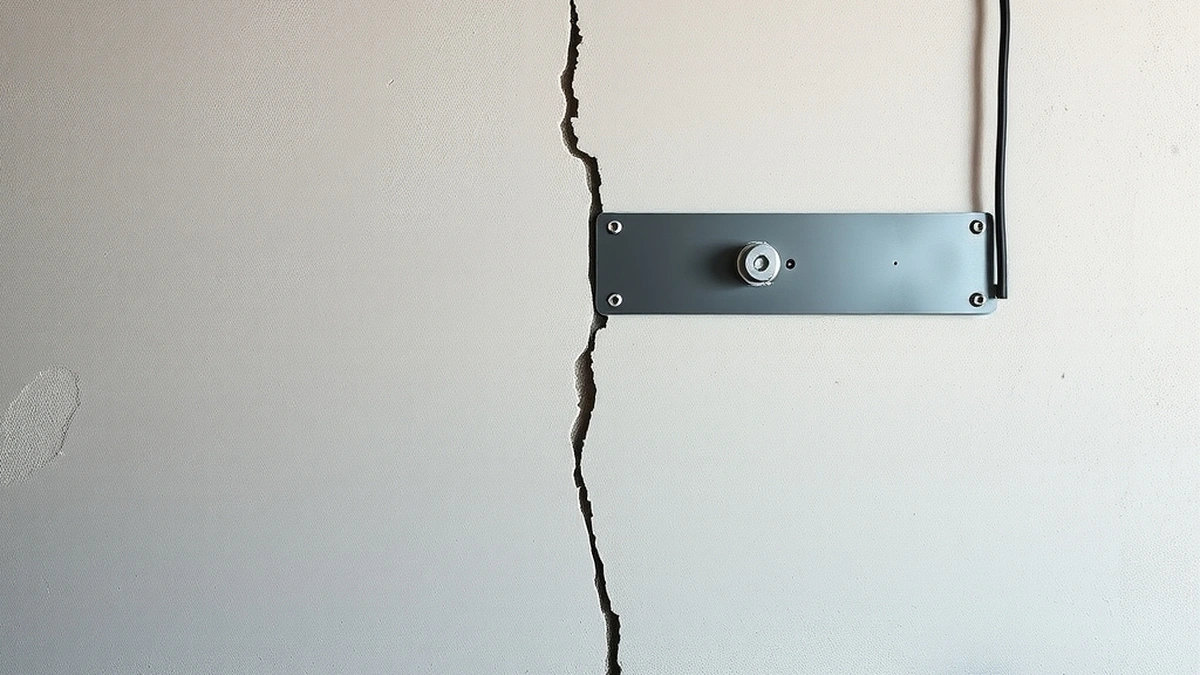
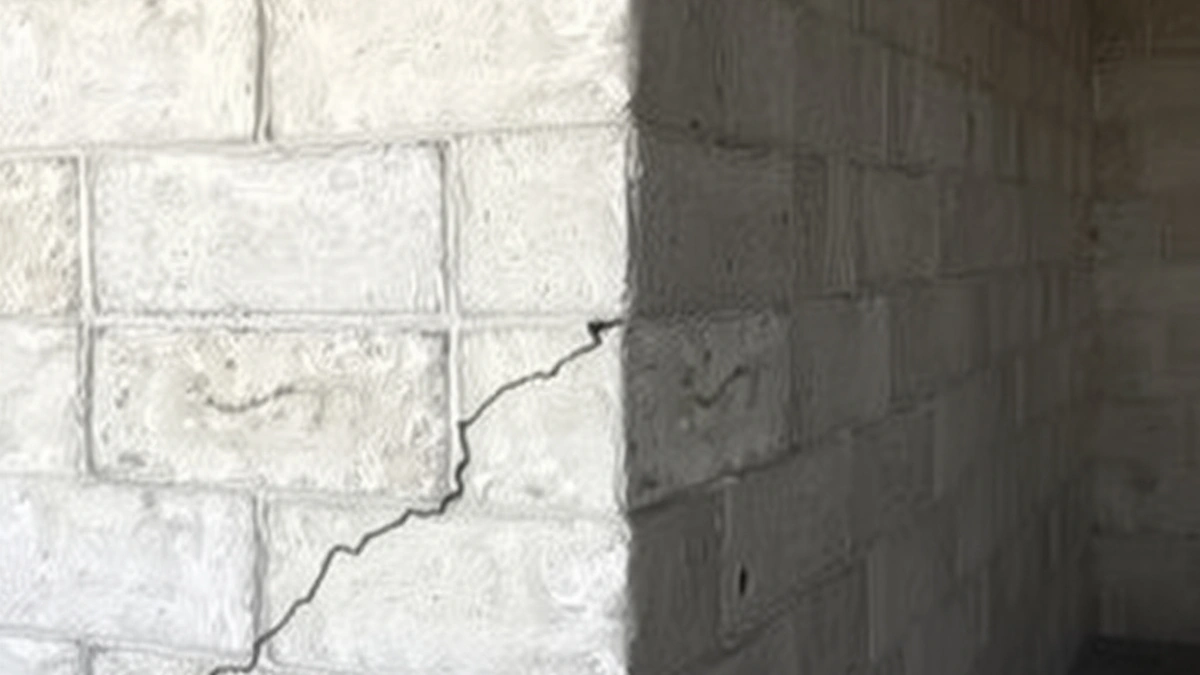
The most frequent issues are cracking, settlement, and water intrusion. Cracks narrower than 1/16 inch are generally cosmetic and result from normal concrete shrinkage. Cracks at or wider than 1/8 inch should be monitored, especially if they are diagonal, stair-step, or widening over time.
Lateral movement is another concern. A stem wall should not deflect more than 2 inches from plumb under normal conditions. If displacement approaches that limit, the wall may no longer reliably transfer load to the footing.
Water problems often appear as efflorescence, staining, or spalling at the base of the wall. Poor drainage or missing damp-proofing can accelerate concrete deterioration and corrode embedded rebar.
When to Repair vs. Replace
Repair is appropriate when the stem wall retains adequate load capacity and the damage is localized. Replacement becomes the default option when roughly one-third of the wall has failed structurally, because the cost of piecemeal repairs approaches the cost of rebuilding.
Here is a rough cost framework for decision-making:
| Scope | Estimated Cost |
|---|---|
| Typical repair | $4,000–$15,000 |
| Major structural repair | $20,000–$40,000 |
| Full stem wall replacement | $40,000–$150,000 |
A successful repair should restore between 10 and 25 percent of the wall’s original structural capacity, depending on the method and condition of the remaining concrete.
Repair Methods and Costs
Several methods address different failure modes. Push piers cost $1,000 to $3,000 each and are driven through unstable soil to reach bearing strata. Helical piers cost $700 to $2,500 each and are screwed into the ground, often used when access is limited or soil conditions favor torque installation. A full pier job typically runs $6,000 to $30,000 depending on pier count and depth to bearing.
For bowed or cracked walls, carbon fiber straps cost $400 to $1,200 and bond to the wall face to resist further movement. Wall anchors cost $500 to $1,500 each and connect the stem wall to stable soil outside the foundation footprint.
If the issue is a settled interior slab rather than the stem wall itself, slab lifting costs $3 to $12 per square foot. Mudjacking costs $3 to $8 per square foot and lasts an estimated 5 to 15 years. Polyurethane foam injection costs $5 to $15 per square foot.
Example arithmetic: A home needing four helical piers at $1,500 each plus a $1,000 engineer inspection would total approximately $7,000 before permits or excavation. Adding carbon fiber straps at $800 each for three locations adds $2,400, bringing the estimate to about $9,400.
More detail on individual methods is available at /push-pier-cost/, /helical-pier-cost/, and /carbon-fiber-foundation-repair-cost/.
Measuring Before You Buy a Repair
Measure first, method second, price third. Before signing a contract, document crack width at multiple points, note whether cracks are active or dormant, and record any floor slope or door misalignment. An engineer inspection costs $400 to $1,500 and usually has a lead time of 1 to 2 weeks.
Pier count depends on the load per pier and the spacing required to support the wall. Depth to bearing varies by soil report and local conditions. Unit price alone does not determine total cost; a lower-priced pier requiring twice as many units can cost more than a higher-priced pier installed in fewer locations.
Permits, Inspections, and Warranties
Permit requirements vary by city and county and typically take 1 to 3 weeks to process. Inspections may be required at footing, wall, and backfill stages. Warranty terms differ by repair type: pier warranties are often lifetime and transferable, though a transfer fee of $100 to $500 may apply. Mudjacking carries an estimated life of 5 to 15 years.
Crawl space encapsulation, when part of a broader moisture strategy, costs $3 to $8 per square foot or $4,000 to $15,000 per job. It does not repair structural stem wall damage but can reduce future moisture-related deterioration.
Choosing a Contractor
Ask for a written scope that lists pier count, depth to bearing, unit price, and total price. Confirm whether the quote includes permits, engineering stamps, and warranty transfer fees. Compare estimates on the same measurement basis rather than accepting the lowest total without verifying what is included.
For broader cost context, see /foundation-repair-cost/. If your home uses a crawl space instead of a stem wall, /pier-and-beam-foundation-repair-cost/ covers related systems. For crack-specific pricing, /foundation-crack-repair-cost/ details repair options by crack width and movement.
Next, compare foundation repair cost, pier and beam foundation repair cost, foundation crack repair cost before you commit.
Frequently asked questions
What is a stem wall foundation?
A stem wall foundation is a concrete wall built on top of a continuous footing that supports the structure and elevates the floor above grade.
How much does stem wall repair cost?
Most stem wall repairs fall between $4,000 and $15,000, while major structural work can reach $20,000 to $40,000 and full replacement may cost $40,000 to $150,000.
When is a crack cosmetic versus structural?
Cracks 1/16 inch or less are generally cosmetic; cracks at or above 1/8 inch warrant monitoring, and movement approaching 2 inches typically needs professional evaluation.
Do stem walls require permits?
Yes, permits vary by city and county and typically take 1 to 3 weeks to process after an inspection.
What repair methods work for stem walls?
Common options include push piers at $1,000–$3,000 each, helical piers at $700–$2,500 each, carbon fiber straps at $400–$1,200, and wall anchors at $500–$1,500 each.
How long does an inspection take to schedule?
Engineer inspection lead time is usually 1 to 2 weeks, and the inspection itself typically costs $400 to $1,500.
Sources
Some links are affiliate links.If you buy through them we may earn a commission at no extra cost to you. We do not accept payment for rankings. Read the full disclosure.