Push Pier Problems: Limits and Failure Modes
Push piers fail when they stop above bearing soil, miss a footing, or are used for the wrong movement. See the limits and the fixes.
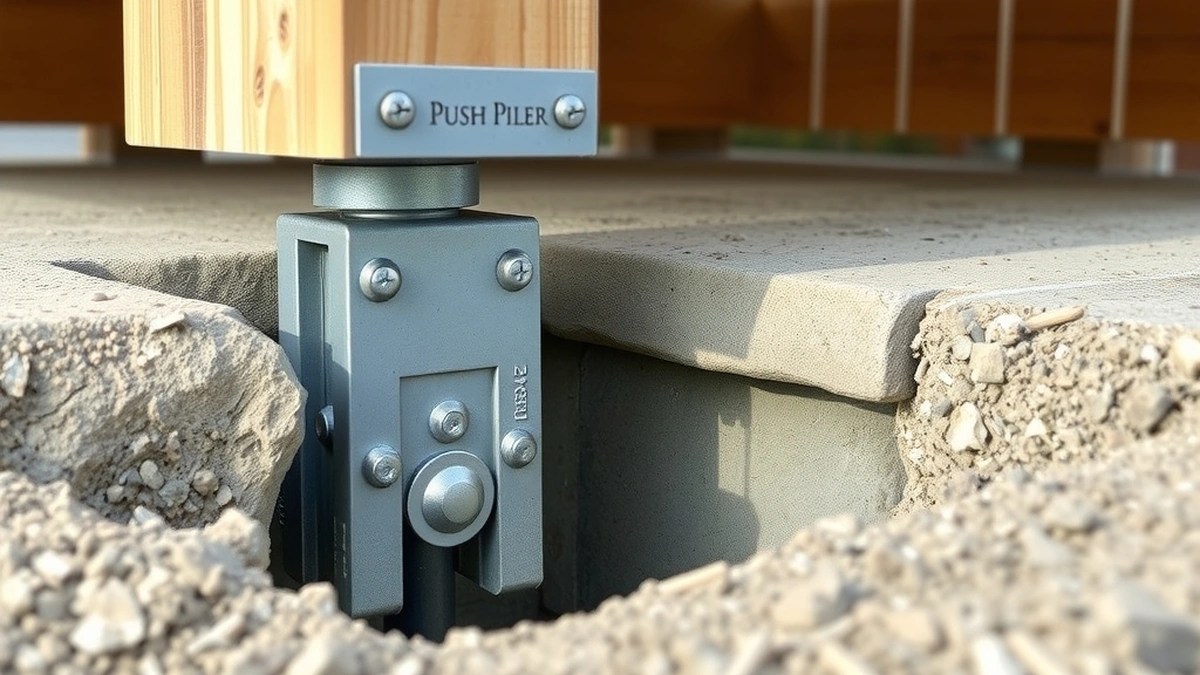
Push pier problems include shallow refusal, footing bracket failure, lateral movement, and use on the wrong failure type. A proper design with a recorded refusal log prevents most of them, at $1,000 to $3,000 per pier.
- Cost per pier
- $1,000 - $3,000
- Typical depth
- 15 - 30 feet
- Common failure
- Shallow refusal
- Repair of failure
- $2,000 - $15,000
- Engineering report
- $400 - $1,500
Some links on this page are affiliate links.If you buy through them we may earn a commission at no extra cost to you. We do not accept payment for rankings. Read the full disclosure.
Push pier problems are mostly design and installation problems, not material problems. Steel does not fail at residential loads. What fails is the decision about where the pier stops, how the bracket attaches, and whether piers were the right method in the first place. Each of those is visible in the documents if you ask for them, and a contractor who resists providing them has told you what the answer will be.
Shallow Refusal
The most common problem is a pier that stops above the bearing stratum. It may hit a boulder, a buried utility, or a hard layer that is not strong enough to carry the load. The refusal pressure helps distinguish a true refusal from an obstruction, but only if the reading is recorded.
The consequence is a pier that looks installed and carries nothing. The footing settles again, the crack reopens, and the homeowner pays twice. A refusal log with depth and pressure for every pier is the protection. Compare the depths across the job. If every pier refused at exactly the same depth, the log is probably a formality rather than a record, because real soil varies across a foundation.
Bracket Problems
The bracket transfers the house load to the pier, and it needs sound concrete to bear on. A footing that is crumbled, undercut, or too narrow for the bracket will not hold, no matter how deep the pier goes.
| Bracket issue | Symptom | Fix |
|---|---|---|
| Crumbled footing | Bracket crushes concrete | Concrete collar or new footing |
| Undercut footing | Bracket slips off edge | Rebuild the edge |
| Narrow footing | Bracket cannot seat | Custom bracket |
| Loose bolts | Bracket moves under load | Re-torque or replace |
A contractor who does not inspect the footing before attaching the bracket is skipping the step that decides whether the repair works. The inspection is not exotic: it is a look at the concrete under the bracket, a tap with a hammer, and a check that the footing is wide enough to seat the bracket. It takes ten minutes and prevents the most expensive failure mode in the trade.
Lateral Movement
Push piers resist vertical load. They do not resist the lateral pressure that bows a wall. Using them on a bowing wall produces a repair that does not address the load, and the wall keeps moving.
The diagnostic is simple. A horizontal crack at mid-height with a wall out of plumb is lateral movement. A stair-step crack with a settled corner is vertical. Measure the wall with a level before the method is chosen, because the crack pattern alone can be misleading on a long wall with both problems. The first needs anchors or straps, the second needs piers.
Lift Problems
Lifting too fast is the third common problem. The house is raised in increments, and the frame, plumbing, and cladding need time to follow. A crew that lifts an inch in one pass can crack drywall, break a drain line, or jam a door permanently.
The engineer’s lift tolerance exists for this reason. A typical target is bringing the floor within an inch of level rather than perfect, because the rest of the house has accommodated the old position for decades. Chasing a perfectly level floor on a 70-year-old house is how a repair turns into a renovation.
A Costed Fix
A failed six-pier job that needs four additional piers at $2,000:
4 × $2,000 = $8,000
Add engineering at $900 and restoration at $1,500:
$8,000 + $900 + $1,500 = $10,400
That is the cost of a second repair, and it is why the refusal log matters more than the unit price on the first one. A cheaper first bid with no log is not cheaper once the second crew arrives.
The Limits
Push piers need access for a hydraulic rig and space for steel sections, typically 8 to 10 feet of working room along the wall. They need a competent stratum within reach. They need a footing that can take a bracket. And they need a vertical failure to address.
Where any of those is missing, the method is wrong regardless of how well it is executed. Deep fill, organic soil, and inaccessible walls are the usual reasons to choose helical piers or another system. A third is a house that has already been lifted once; a second lift on the same piers is a sign the design or the soil was misjudged, and the next step is an engineer, not another crew.
The Sequence to Avoid Problems
- Get an engineer’s design with depth and capacity.
- Inspect the footing before attaching brackets.
- Locate utilities and record the ticket.
- Drive to refusal and log depth and pressure.
- Stop and reposition if refusal is shallow.
- Lift in increments to the stated tolerance.
- Hand over the log and the lift record.
What to Ask Before Hiring
Ask how refusal is defined, what pressure is required, and what happens if it is not reached. Ask how the footing will be inspected and what bracket is specified. Ask for the lift tolerance in writing, and ask to see a sample log from a previous job.
For the method context, read how push piers work and push piers versus helical piers. If the wall is bowing rather than settling, wall anchors explained covers the right repair.
Frequently asked questions
What are the common problems with push piers?
Shallow refusal, brackets attached to unsound concrete, piers that deflect on obstructions, and use on bowing walls where lateral restraint is needed instead.
Why would a push pier stop too shallow?
A boulder, a utility, or a hard layer can stop the pier above the design depth. The refusal pressure helps identify it, and the pier may need to be repositioned.
Can push piers cause new cracks?
Lifting too fast or too far can crack finishes and plumbing. The engineer's lift tolerance and a slow, monitored lift prevent most of it.
Do push piers work on all soils?
They work where a competent stratum exists within reach. On deep fill or organic soil, refusal may not occur at a depth the pier can reach, and another system is needed.
How can I tell if a push pier job was done properly?
Ask for the refusal log and the lift record. They show the depth and pressure for each pier and the elevation change achieved.
What happens if a push pier fails?
The footing settles again and the crack reopens. The fix is usually additional piers or a deeper design, and the warranty should cover the rework if the original design was followed.
Sources
Some links are affiliate links.If you buy through them we may earn a commission at no extra cost to you. We do not accept payment for rankings. Read the full disclosure.