How Long Does It Take to Repair a Foundation?
Most foundation repairs take 2 to 5 days on site, with 1 to 3 weeks for permits and 1 to 2 weeks for inspection scheduling before work starts.
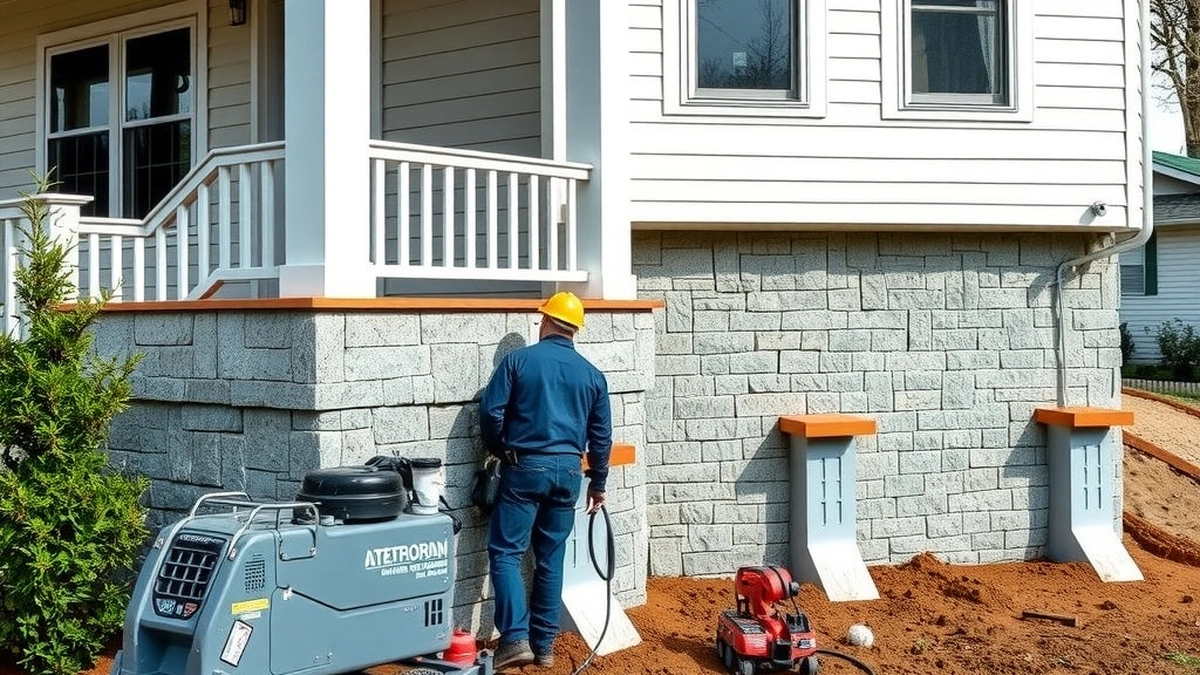
A typical foundation repair takes 2 to 5 days on site. Permits add 1 to 3 weeks and inspection scheduling adds 1 to 2 weeks, so the calendar from signature to completion is often 4 to 8 weeks.
- On-site time
- 2 - 5 days
- Permit review
- 1 - 3 weeks
- Inspection lead time
- 1 - 2 weeks
- Restoration
- 1 - 2 weeks after
- Full replacement
- 2 - 6 weeks
Some links on this page are affiliate links.If you buy through them we may earn a commission at no extra cost to you. We do not accept payment for rankings. Read the full disclosure.
A typical foundation repair takes two to five days on site. The calendar from signature to completion is longer, usually four to eight weeks, because permits take one to three weeks and inspection scheduling adds one to two. The physical work is fast; the administration is not.
The Pre-Construction Phase
The first step is the engineer’s report, which usually takes three to seven business days after the inspection. That report defines the scope, the pier count, and the design depth, and no contractor should be bidding before it exists.
The permit application follows. Local review takes one to three weeks in a typical jurisdiction and longer in a busy one, and the contractor should file as soon as the drawings are ready rather than waiting for a start date.
The Work Itself
| Scope | On-site time | Notes |
|---|---|---|
| Crack injection | 2 - 4 hours | One technician |
| Re-shimming | 1 - 2 days | Crawl space access |
| Pier installation | 2 - 5 days | Excavation and driving |
| Wall anchors | 1 - 3 days | Interior and exterior work |
| Full replacement | 2 - 6 weeks | House lifted and reset |
The pier work is paced by excavation and driving, not by the number of piers alone. A wall with clear access goes faster than one behind a deck or a fence.
What Happens Each Day
Day one is layout, protection, and excavation. Day two is pier driving, which is the loudest and most disruptive part. Day three is usually the final piers, the lift, and the lock-off, followed by backfill and cleanup.
A larger job extends each phase rather than adding new ones. Twelve piers on three walls take longer than four on one, but the sequence is the same.
What Slows a Job Down
Weather is the most common cause. Rain fills excavations and softens the ground, and freezing temperatures slow concrete and make excavation harder.
Utility conflicts are second. A pier location that sits on a sewer lateral has to move, and the relocation takes time. Deeper-than-expected bearing soil is third, because every extra foot of steel is extra driving.
The Restoration Timeline
Interior cracks and paint are repaired after a settling period, usually one to two weeks. Painting immediately after a lift means repainting when the frame finishes moving.
Exterior restoration follows backfill. Sod, gravel, and walks are usually restored within a week of the crew leaving, and landscaping may take a season to recover.
The Occupancy Question
Most pier work happens outside the footprint, so the house stays occupied. The disruptive parts are the noise, the blocked driveway, and the dust that finds its way through basement windows.
If the work is interior, such as a sump pit or interior piers, expect more disruption and a shorter working day. The contractor should tell you the schedule the day before, not the morning of.
The Sequence
- Engineer inspection and report: 3 to 7 business days.
- Bids and contract: 1 to 2 weeks.
- Permit review: 1 to 3 weeks.
- Utility locate and scheduling: 1 to 2 weeks.
- On-site work: 2 to 5 days.
- Inspection and sign-off: 1 to 5 days.
- Interior restoration: 1 to 2 weeks after.
Planning Around the Calendar
If the movement is active, the calendar matters. A job that starts in eight weeks is eight weeks of additional movement, and the crack may widen in that time.
Ask the contractor what temporary measures are available while you wait, and get the answer in the contract. In most cases the answer is monitoring, and in a few it is shoring.
Two to five days on site is the honest answer for most pier jobs, and four to eight weeks is the honest answer for the full process. Anything faster usually means the permit was skipped, and anything slower usually means the soil or the weather intervened.
A homeowner can shorten the calendar by doing three things. Get the engineer’s report before shopping for contractors, so the bids are comparable and the permit drawings can start immediately. Ask the contractor to file the permit while the contract is being signed rather than after. And move vehicles and clear access the day before the crew arrives.
The inspection step is often the least predictable. A jurisdiction with two inspectors and a busy spring can take longer than the permit review, and there is nothing the contractor can do except schedule early.
A realistic plan allows eight weeks from signature to a finished interior. A best case is four weeks, and a delayed case is twelve. The physical work is a small part of all three.
If a contractor promises a start date within a week on a structural repair, ask to see the permit number. A job that starts before the permit is issued is a job that will have an inspection problem later, and the homeowner inherits it at resale.
The same logic applies to the engineer’s report. A contractor who offers to skip it to save two weeks is offering to skip the document that defines the scope, and the schedule gain is not worth the risk.
For the cost side, read how much does foundation repair cost and foundation repair cost. If the scope includes replacement, foundation replacement cost sets the longer timeline.
Frequently asked questions
How long does foundation repair take?
Most pier jobs take two to five days on site. The full calendar is longer because permits take one to three weeks and inspections add one to two weeks.
Can I stay in the house during the work?
Usually yes for exterior pier work. Expect noise, vibration, and dust, and plan to be out during the loudest hours if you work from home.
Why does the permit take so long?
Local review, plan checks, and inspection scheduling all take time, and busy jurisdictions take longer. The contractor should file early in the process.
How long before I can paint over repaired cracks?
Wait one to two weeks after the lift for the structure to settle, then repair and paint. Painting immediately usually means repainting.
Does foundation replacement take longer?
Yes. A full replacement usually runs two to six weeks on site, plus planning and permits, because the house is lifted and the foundation is rebuilt.
What slows a foundation job down?
Weather, utility conflicts, deeper-than-expected bearing soil, and inspection scheduling are the common causes of delay.
Sources
Some links are affiliate links.If you buy through them we may earn a commission at no extra cost to you. We do not accept payment for rankings. Read the full disclosure.