Home Foundation Repair: The Owner's Decision Path
From the first crack you notice to the final inspection, here is the order a homeowner should follow, with real prices at each step.
Home foundation repair starts with a measured inspection, then an engineer's scope, three bids, and a permit. Most jobs cost $4,000 to $15,000, take two to five days on site, and are paid for with savings, a loan, or a contractor payment plan.
- Inspection
- $400 - $1,500
- Typical repair
- $4,000 - $15,000
- Major repair
- $20,000 - $40,000
- Permit timeline
- 1 - 3 weeks
- On-site time
- 2 - 5 days
Some links on this page are affiliate links.If you buy through them we may earn a commission at no extra cost to you. We do not accept payment for rankings. Read the full disclosure.
Home foundation repair follows a fixed order: measure the symptom, get an independent inspection, define the scope, compare bids on that scope, permit the work, and inspect the result. Skipping ahead to a free estimate is how homeowners end up paying for piers they did not need or missing the drainage problem that caused the movement.
Start With What You Can Measure
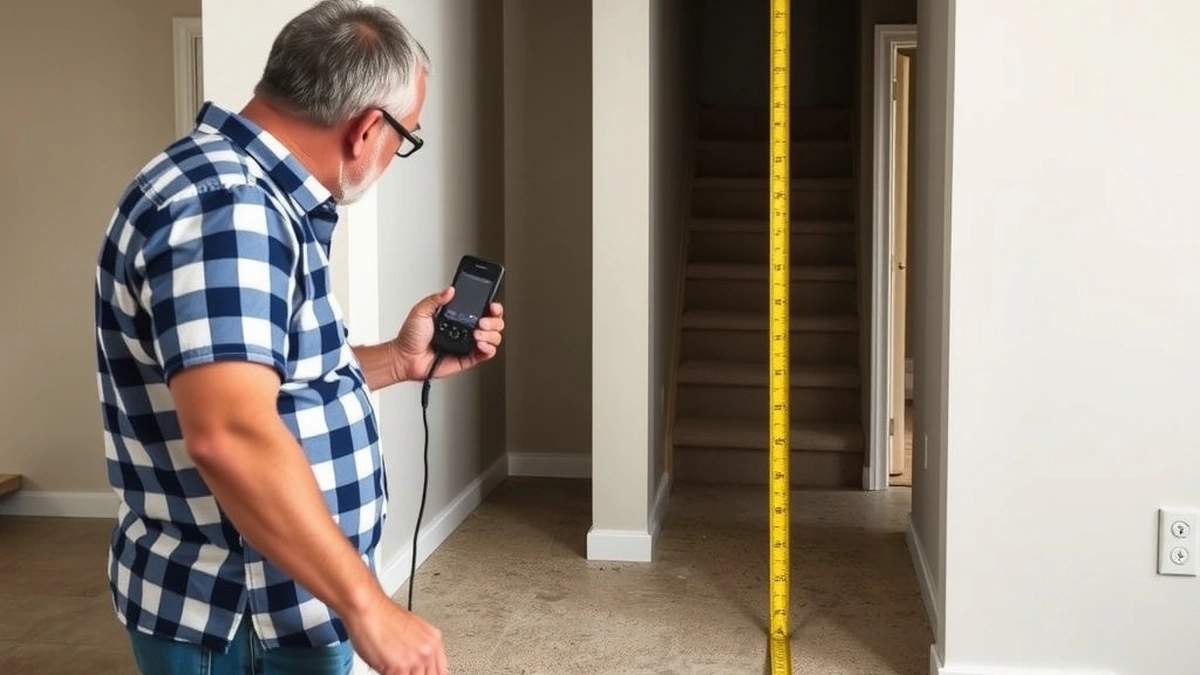
You do not need a contractor to take the first reading. A crack gauge costs a few dollars, and a 4-foot level tells you whether a wall is plumb. Record the crack width at its widest point, photograph it with a scale in frame, and note the date.
Do that again in 30 days. A crack that has not changed is dormant and can be watched. A crack that has widened by 1/32 inch in a month is active, and active movement changes the schedule from “this year” to “this month.” The 1/8 inch mark is the usual threshold for calling an engineer, and 2 inches of wall movement is the practical limit for lifting.
Book the Right Kind of Inspection
A free foundation estimate is a sales call. A paid inspection from a structural engineer is an opinion you own. The engineer measures floor elevation, checks wall plumb, examines the footing where it is visible, and writes a scope that names the method, the pier count, and the design depth.
Expect to pay $400 to $1,500. The report is typically 5 to 15 pages with photographs and a repair recommendation, and it is the document three contractors should be bidding against. Without it, you are comparing three different opinions rather than three prices for the same work.
Understand What the Repair Will Cost
| Scope | Cost | What it covers |
|---|---|---|
| Crack injection | $400 - $1,200 | Sealing a stable leak |
| Typical repair | $4,000 - $15,000 | Several piers or anchors |
| Major repair | $20,000 - $40,000 | Whole-wall stabilization |
| Replacement | $40,000 - $150,000 | New foundation under a lifted house |
Add 10% to 25% of the structural cost for interior restoration. A $12,000 pier job implies $1,200 to $3,000 in drywall, paint, and trim work once the lift is complete.
Paying for It
| Route | Best for | Watch for |
|---|---|---|
| Savings | Small repairs under $5,000 | Depleting emergency fund |
| Home equity line | $10,000 to $50,000 | Variable rate, closing costs |
| Contractor financing | Mid-size jobs | Deferred interest terms |
| Specialty loan | No home equity | Higher APR, origination fees |
Compare the annual percentage rate across offers, not the monthly payment. A 60-month plan at 9% on $15,000 costs about $311 per month and roughly $3,690 in interest over the term. A 120-month plan at the same rate drops the payment to about $190 but raises total interest to about $7,800. The longer term buys cash flow, not savings.
Insurance and Warranty
Homeowners insurance generally excludes settlement, earth movement, and maintenance-related failure. It may cover a sudden event such as a burst supply line that washed out soil under a slab, and it may cover damage from a fire or impact. Read the exclusions page before you assume anything.
A home warranty is a different product with its own exclusions, and foundation coverage is usually limited or absent. If a warranty was sold with the house, read the foundation section before calling, because the answer is often in the fine print rather than the sales pitch.
The Sequence From Signature to Final Inspection
- Approve the engineer’s scope and get three bids against it.
- Verify the contractor’s licence and insurance with the state and the insurer.
- Sign a contract with a pier count, design depth, payment schedule, and warranty.
- Pull the permit; local review typically takes one to three weeks.
- Complete the work, which usually runs two to five days on site.
- Get the lift record and the inspection sign-off before final payment.
- Schedule interior restoration after a one to two week settling period.
What to Keep
Keep the engineer’s report, the permit, the contract, the lift record, the warranty, and the final invoice. Those six documents are what a buyer’s inspector will ask for and what an insurer will want if a future claim touches the foundation. Store them with the house file and photograph them for a cloud backup.
If You Cannot Fund It This Year
Repair can sometimes be phased. If the engineer’s report shows one settled corner and the rest of the foundation is sound, the corner can be stabilized now and the drainage corrected over a weekend, with the remaining cosmetic work deferred. That is a legitimate plan when the movement is slow and the report supports it.
What is not legitimate is deferring an active bow. A wall moving inward past an inch has a failure mode that does not wait for a better budget, and temporary shoring is far cheaper than a collapsed wall. Ask the engineer to rank the findings by consequence, not by cost, and to state in writing which items can wait a year without increasing the eventual price. That ranking is the single most useful page in the report for a homeowner on a tight budget.
For the next step, read foundation inspection cost before you book, and foundation repair financing before you borrow. If the engineer recommends replacement rather than repair, foundation replacement cost sets the expectations.
Frequently asked questions
What should a homeowner do first about foundation cracks?
Measure the width and photograph it with a scale. Cracks at 1/8 inch or wider, or any wall that is out of plumb, justify a paid inspection by an engineer rather than a free sales visit.
How much should I budget for home foundation repair?
Budget $4,000 to $15,000 for a typical repair and $20,000 to $40,000 for major structural work. Keep a contingency of 10% to 25% for interior restoration.
Will insurance pay for home foundation repair?
Usually not for settlement or maintenance-related movement. Sudden events such as a burst pipe or a vehicle impact may be covered, and the policy wording decides.
How do homeowners pay for foundation repair?
Savings, a home equity line, a contractor payment plan, or a specialty home improvement loan are the common routes. Compare the annual percentage rate, not the monthly payment.
How long can I wait before repairing a foundation?
A dormant crack can be monitored for months. Active movement, a wall out of plumb beyond an inch, or a crack at 1/8 inch or wider is a reason to act within weeks rather than seasons.
Will foundation repair disrupt my family?
Most jobs keep the house occupied. Expect two to five days of noise, a blocked driveway, and dust control measures, plus a short water shutoff if interior plumbing is involved.
Sources
Some links are affiliate links.If you buy through them we may earn a commission at no extra cost to you. We do not accept payment for rankings. Read the full disclosure.