Earthquake Damage and Foundation Cover
Earthquake damage to a foundation is usually excluded from a standard homeowners policy. See what endorsements cover and how claims work.
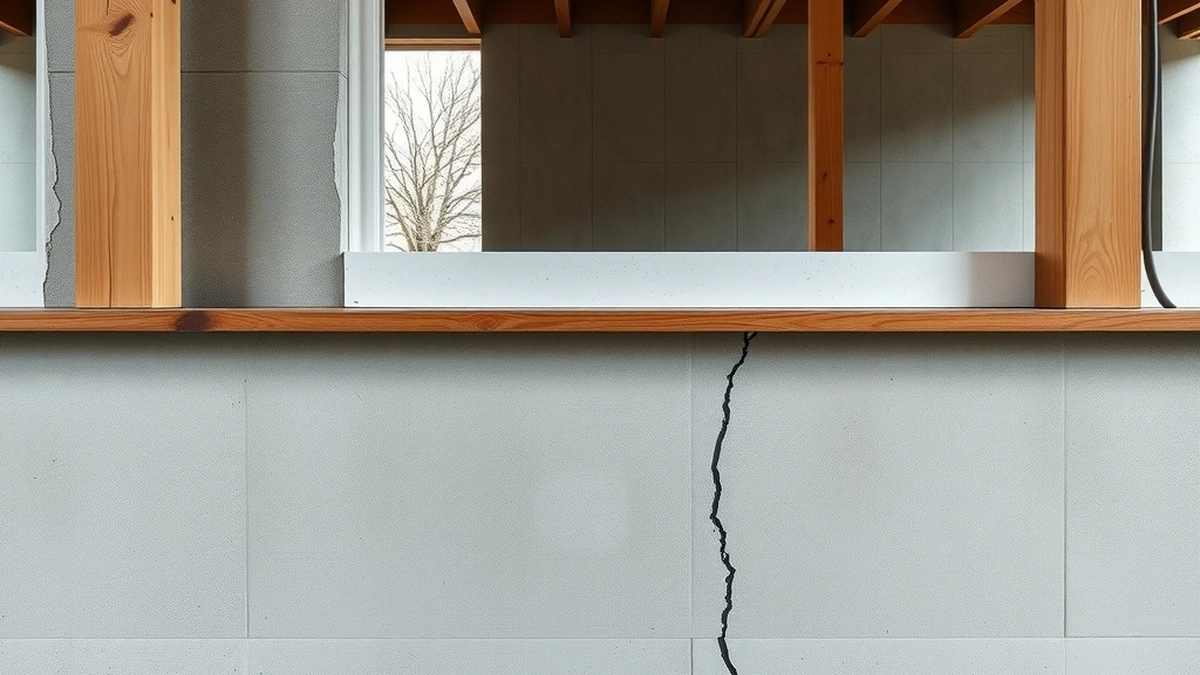
Standard homeowners insurance excludes earthquake damage, including foundation damage. Cover requires a separate earthquake endorsement or policy, usually with a 10% to 15% deductible, and retrofitting costs $3,000 to $15,000.
- Typical earthquake deductible
- 10% - 15% of dwelling coverage
- Engineering inspection
- $400 - $1,500
- Seismic retrofit
- $3,000 - $15,000
- Major structural repair
- $20,000 - $40,000
- Full replacement
- $40,000 - $150,000
Some links on this page are affiliate links.If you buy through them we may earn a commission at no extra cost to you. We do not accept payment for rankings. Read the full disclosure.
Earthquake damage to a foundation is excluded from a standard homeowners policy, which surprises most people after a tremor. Cover requires a separate earthquake policy or an endorsement, and that cover carries its own percentage deductible. The foundation repair itself runs from $4,000 for localized damage to $150,000 for full replacement.
What Counts as Earthquake Damage
Earthquake damage to a foundation is the cracking, shifting, or separation of foundation elements caused by ground shaking or by the ground failure that follows it. Shaking alone can crack a footing, shear a cripple wall, or pull a sill plate off its anchor bolts. Liquefaction, where saturated sandy soil behaves like a liquid, can cause a house to sink or tilt.
The distinction that matters for insurance is cause. Damage from shaking is covered by an earthquake policy. Damage from poor drainage or long-term settlement is not, even if an earthquake made it worse. Insurers draw that line carefully, which is why documentation of the pre-event condition is so valuable.
What a Standard Policy Does
| Cause | Standard HO-3 policy | Earthquake endorsement |
|---|---|---|
| Wind and hail | Covered | Not relevant |
| Sudden water damage | Covered with limits | Not relevant |
| Long-term settlement | Excluded | Excluded |
| Earth movement | Excluded | Covered, with deductible |
| Foundation crack from quake | Excluded | Covered if deductible met |
The earth movement exclusion is broad. It typically names earthquake, landslide, mudflow, sinkhole, and subsidence. Some states require insurers to offer earthquake cover, but offering it is not the same as including it, and many homeowners decline because of the deductible.
The Deductible Arithmetic
Earthquake deductibles are usually a percentage of dwelling coverage, not a flat dollar amount. On a house insured for $400,000 with a 10% deductible:
$400,000 × 0.10 = $40,000
The homeowner pays the first $40,000 of covered damage. At 15%:
$400,000 × 0.15 = $60,000
That is why a $35,000 foundation repair might fall entirely below the deductible and pay nothing. Before buying the endorsement, compare the deductible to the likely repair cost, not to the premium.
Seismic Retrofitting
Retrofitting reduces the chance that shaking separates the house from its foundation. The common measures are bolting the sill plate to the foundation, adding plywood shear panels to cripple walls, and bracing chimneys and water heaters. Costs typically run $3,000 to $15,000 depending on the house and the region.
| Retrofit measure | Typical cost | What it prevents |
|---|---|---|
| Sill plate bolting | $1,500 - $4,000 | House sliding off foundation |
| Cripple wall bracing | $3,000 - $8,000 | Wall collapse under the floor |
| Chimney bracing | $1,000 - $3,000 | Chimney falling through roof |
| Foundation anchoring | $2,000 - $6,000 | Lateral movement at the base |
Retrofitting is not insurance and insurance is not retrofitting. The retrofit reduces the loss; the policy transfers the part of the loss you cannot absorb. Neither one replaces the other, and a house with a bolted sill still needs cover if a quake cracks the footing.
Filing a Claim After a Quake
- Photograph the damage before moving anything, with a tape measure or coin for scale.
- Notify the insurer within the deadline in your policy, which can be as short as 30 days.
- Keep a written log of every call, adjuster visit, and estimate.
- Get an independent structural engineer’s report at $400 to $1,500.
- Do temporary repairs that prevent further damage and keep the receipts.
- Do not sign a final settlement until the engineer’s scope matches the adjuster’s.
What the Engineer’s Report Does
An engineer’s report separates earthquake damage from pre-existing conditions. It records crack widths, wall plumb, and footing condition, and it states whether the damage is consistent with the event. Insurers rely on that distinction, and a report written before repairs begin is far more useful than one written after.
Ask the engineer to photograph and measure, not just describe. A crack recorded at 1/16 inch before the event and 3/16 inch after is evidence. A statement that the wall “appears cracked” is not. For the structural side, see engineering report for insurance and foundation inspection cost.
Coverage Limits and Exclusions Worth Reading
Three clauses decide most earthquake claims. The first is the deductible, which applies per event and can wipe out a mid-sized claim entirely. The second is the loss-of-use limit, which pays for temporary housing while the house is uninhabitable, and it is often capped at a dollar amount that runs out long before a rebuild finishes.
The third is the masonry veneer and outbuilding exclusion. A detached garage, a block retaining wall, and a brick veneer can each be excluded or sub-limited even when the main dwelling is covered. Read the declarations page and ask the agent to point to each limit in writing rather than describing it over the phone.
Contents coverage is usually a percentage of the dwelling limit, and it may be lower for earthquake than for the main policy. If the house is rented out, a landlord policy has its own earthquake terms and does not follow the tenant’s renters policy. None of these details change the physics of the repair, but they change who pays for it.
If the damage is severe, the repair decision follows the same logic as any other foundation failure. Read foundation repair versus replacement before accepting a rebuild quote, and check sinkhole coverage if the ground under the house moved rather than the house itself.
Frequently asked questions
Does homeowners insurance cover earthquake damage?
A standard homeowners policy excludes earth movement, including earthquakes. You need a separate earthquake policy or an endorsement added to the existing policy.
What does an earthquake endorsement cover?
It typically covers the dwelling and sometimes personal property for shake damage, with a percentage deductible that applies separately from the main policy deductible.
How does the earthquake deductible work?
It is usually stated as a percentage of dwelling coverage, often 10% to 15%. On a $400,000 dwelling, a 10% deductible means you pay the first $40,000 of damage.
Does earthquake insurance cover foundation repair?
It can, when the damage is caused by the covered earthquake event. Cracked footings, shifted walls, and settlement caused by the shake are usually included once the deductible is met.
What is seismic retrofitting?
It is the strengthening of a house against shaking, commonly by bolting the sill to the foundation and bracing cripple walls. It reduces damage but does not make a house earthquake-proof.
How much does foundation earthquake damage cost to repair?
Repairs range from $4,000 to $15,000 for localized damage, $20,000 to $40,000 for major structural work, and $40,000 to $150,000 for a full foundation replacement.
Sources
Some links are affiliate links.If you buy through them we may earn a commission at no extra cost to you. We do not accept payment for rankings. Read the full disclosure.