Concrete Foundation Repair: Cracks, Spalling, and Piers
Poured concrete fails in predictable ways: shrinkage cracks, spalling from rebar corrosion, and settlement. Match the repair to the failure.
Concrete foundation repair costs $400 to $1,200 for crack injection, $1,000 to $3,000 per push pier for settlement, and $4,000 to $15,000 for a typical structural job. The failure type decides the method, not the crack size alone.
- Crack injection
- $400 - $1,200
- Push pier each
- $1,000 - $3,000
- Typical repair
- $4,000 - $15,000
- Major repair
- $20,000 - $40,000
- Engineer inspection
- $400 - $1,500
Some links on this page are affiliate links.If you buy through them we may earn a commission at no extra cost to you. We do not accept payment for rankings. Read the full disclosure.
Concrete foundation repair costs $400 to $1,200 for a leaking crack and $4,000 to $15,000 for a structural repair involving piers or anchors. Poured concrete fails in a few predictable ways, and the failure type tells you which repair applies. A vertical shrinkage crack and a horizontal bending crack can look similar in a photo and need completely different work.
The Four Failure Modes
Concrete foundation repair is the correction of a defect in a poured wall, footing, or slab. The defect usually falls into one of four groups: cracking from shrinkage or settlement, spalling from corrosion, bowing from lateral pressure, or displacement from soil movement.
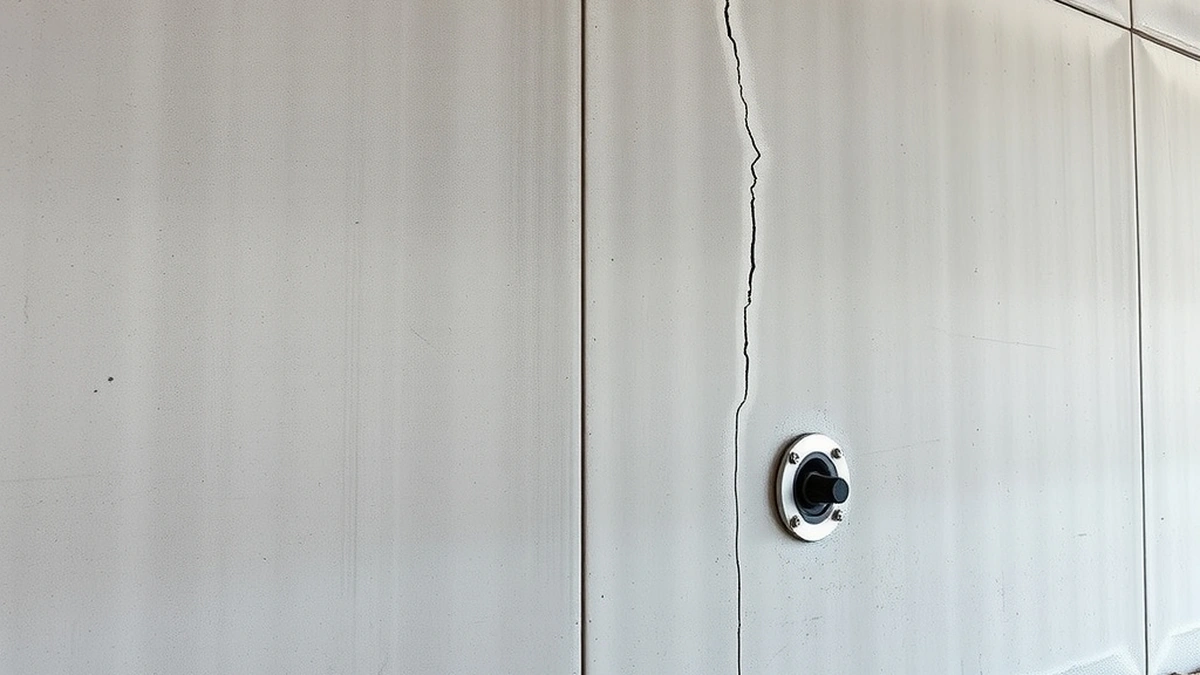
Shrinkage cracks appear as the concrete cures and are usually vertical, narrow, and stable. Settlement cracks follow the same pattern but widen over time. Spalling is surface loss, often with rust staining. Bowing shows as a horizontal crack and a wall that is out of plumb when checked with a level.
Reading the Crack
| Finding | Width or measure | What it suggests |
|---|---|---|
| Hairline vertical | Under 1/16 inch | Shrinkage, usually cosmetic |
| Vertical, stable | Around 1/8 inch | Monitor with a gauge |
| Vertical, widening | Over 1/8 inch | Settlement or a cold joint |
| Horizontal at mid-height | Any width | Lateral pressure, engineer needed |
| Offset across the crack | Any visible step | Movement, not shrinkage |
A crack that is wider at one end than the other is telling you the wall has rotated or dropped. A crack of even width is more likely shrinkage. Photograph each one with a ruler or a coin in frame so the change is measurable later.
Injection: What It Does and Does Not Do
Crack injection fills a crack with epoxy or polyurethane resin under pressure. Epoxy restores structural continuity in a dry crack. Polyurethane foams and cures flexible, which suits cracks that leak and may move slightly.
Injection costs $400 to $1,200 for a typical wall crack and takes a few hours. It stops water and it bonds the two faces back together. It does not stop a wall that is being pushed inward, because the pressure that opened the crack is still there. Injection is the right repair for a stable, leaking crack and the wrong repair for a moving wall.
Spalling and Rebar Corrosion
Spalling starts when water reaches the reinforcing steel. The steel rusts, rust occupies more volume than steel, and the expansion pops the concrete cover off. What you see is a shallow crater with a rust stain and, often, exposed rebar underneath.
Repair means removing all loose and delaminated concrete, cleaning the steel, applying a corrosion inhibitor, and rebuilding the section with a polymer-modified repair mortar. Small areas cost a few hundred dollars. Extensive spalling across a wall is a sign the original cover was too thin or the wall has been wet for decades, and a protective coating or a rebuilt section may be the better spend.
The Structural Repairs
| Method | Cost | Applied to |
|---|---|---|
| Crack injection | $400 - $1,200 | Stable, leaking cracks |
| Push piers | $1,000 - $3,000 each | Settlement of the footing |
| Helical piers | $700 - $2,500 each | Lighter loads, limited access |
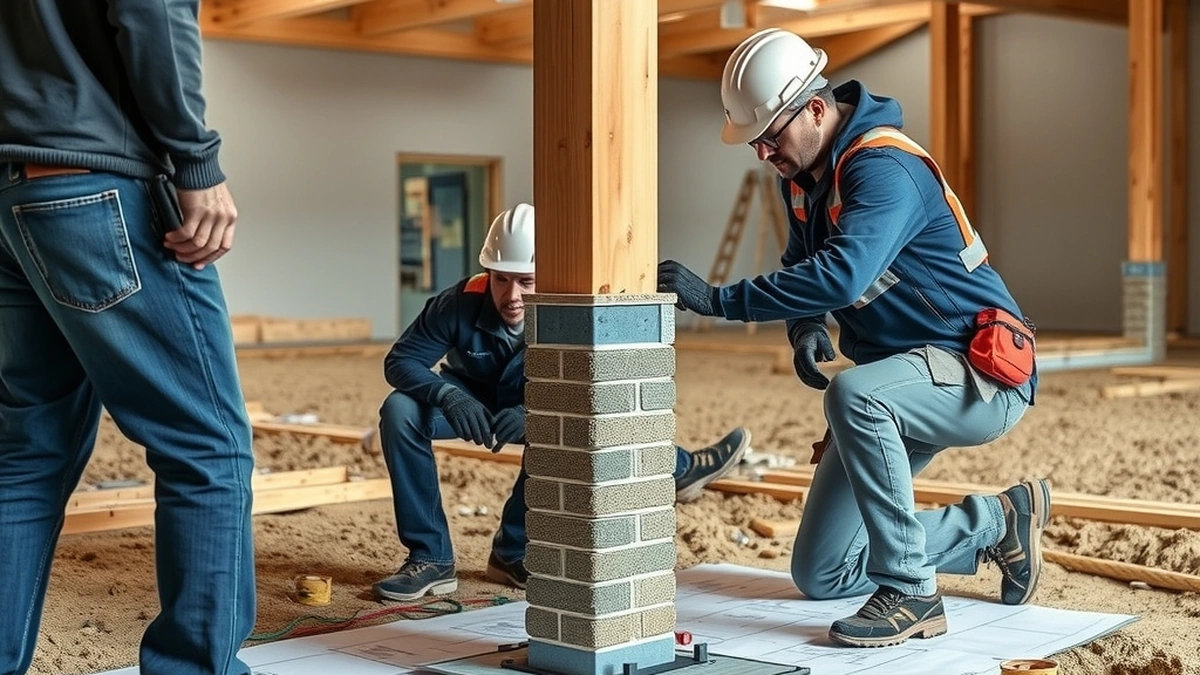
| Wall anchors | $500 - $1,500 each | Bowing from soil pressure |
| Carbon fibre straps | $400 - $1,200 each | Bowing, especially block |
A house that has settled at one corner needs piers, not injection. A wall that is bowing needs restraint, not piers. A wall that is both bowing and settling needs both, and the engineer’s report should say so in that order.
A Costed Example
A 2,000 sq ft ranch has a settled rear wall. The engineer specifies 10 push piers at $2,200 each:
10 × $2,200 = $22,000
Add engineering at $1,200 and a drainage correction at $2,500:
$22,000 + $1,200 + $2,500 = $25,700
That is a major repair, above the $4,000 to $15,000 typical band and below the $20,000 to $40,000 ceiling once restoration is added. Note that the drainage line is not optional in a case like this; without it, the same soil will load the new piers the same way it loaded the old footing.
The Repair Sequence
- Map every crack with a width reading and a photograph.
- Check wall plumb at three points to separate bowing from settlement.
- Book an engineer if a crack is 1/8 inch or wider, or the wall is out of plumb.
- Correct drainage and roof water before structural work.
- Inject stable cracks, or install piers and anchors to the engineer’s design.
- Repair spalled areas and apply a protective coating where specified.
- Re-inspect after one wet season and keep the record with the house.
When Repair Is Not Enough
Replacement becomes the rational choice when roughly 33% of the foundation has failed, when the wall has moved more than 2 inches, or when the concrete is so deteriorated that a pier bracket has nothing to grip. At that point the question is not which repair, but whether the foundation has enough service life left to justify repairing it.
For the wider decision, read foundation repair versus replacement and foundation crack repair cost. If the concrete is a slab rather than a wall, concrete slab foundation repair covers the different failure pattern.
Frequently asked questions
How much does concrete foundation repair cost?
Crack injection runs $400 to $1,200, pier installation runs $1,000 to $3,000 per pier, and most structural jobs land between $4,000 and $15,000.
What causes concrete foundation cracks?
Shrinkage during curing, settlement of the soil beneath the footing, lateral soil pressure, and thermal movement are the four common causes. The crack pattern points to which one applies.
What is spalling on a foundation wall?
Spalling is the flaking or breaking away of the concrete surface, usually caused by rebar corrosion that expands and pushes the cover concrete off. It is a durability problem, not just cosmetic.
Can spalling concrete be repaired?
Yes. The loose material is removed, the rebar is cleaned and treated, and the area is rebuilt with a repair mortar. Extensive spalling may justify a protective coating or a rebuilt section.
Is a vertical crack in concrete serious?
Usually not if it is stable and under 1/8 inch. Vertical cracks are often shrinkage cracks. A widening vertical crack or one with horizontal offset indicates movement and needs an engineer.
Do concrete foundations need waterproofing?
Below-grade walls need either damp proofing or waterproofing, and waterproofing is required where hydrostatic pressure is present. It is separate work from structural repair.
Sources
Some links are affiliate links.If you buy through them we may earn a commission at no extra cost to you. We do not accept payment for rankings. Read the full disclosure.