Structural Foundation Repair: When It Is Required
Structural repair addresses load-bearing failure, not cosmetic cracks. See the thresholds, the methods, and the $4,000 to $40,000 cost bands.
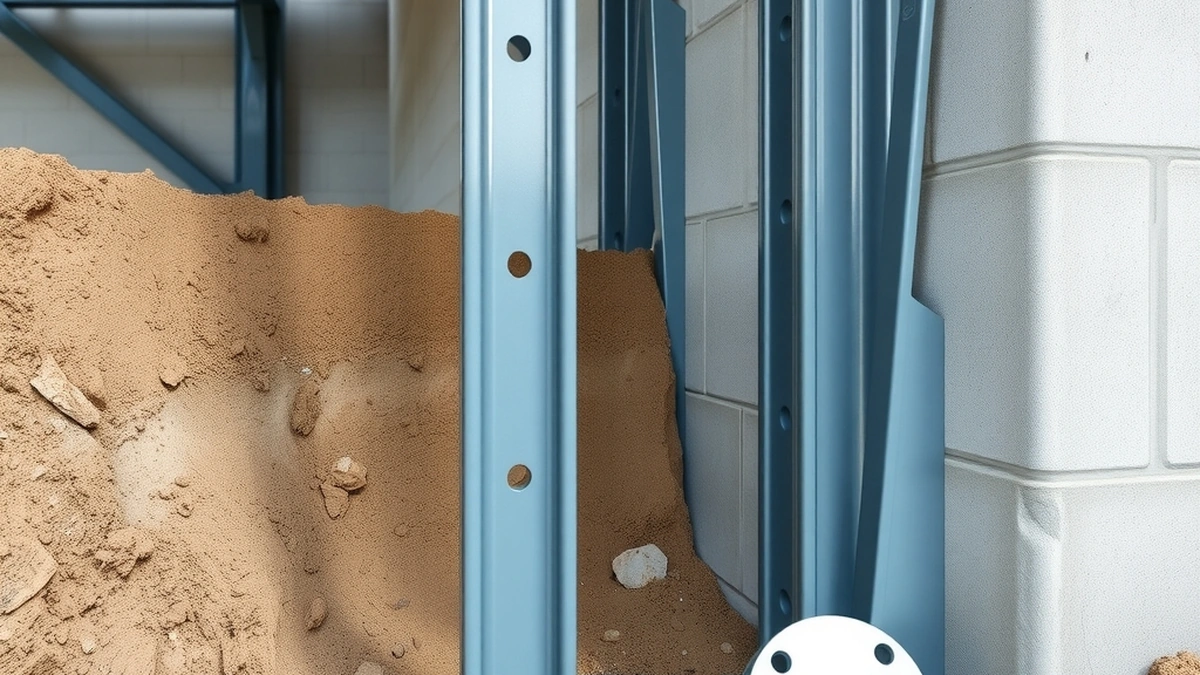
Structural foundation repair addresses a foundation that can no longer carry its loads safely, at $4,000 to $15,000 typically and $20,000 to $40,000 for major work. Cosmetic cracks under 1/8 inch are not structural.
- Typical structural repair
- $4,000 - $15,000
- Major repair
- $20,000 - $40,000
- Engineering report
- $400 - $1,500
- Movement limit
- 2 inches
- Failure threshold
- 33% of foundation
Some links on this page are affiliate links.If you buy through them we may earn a commission at no extra cost to you. We do not accept payment for rankings. Read the full disclosure.
Structural foundation repair is the work that restores a foundation’s ability to carry load, and it costs $4,000 to $15,000 for most houses, rising to $20,000 to $40,000 for major movement. Not every crack is structural. The distinction is whether the foundation can still perform its job, and that is a measurement question.
Structural Versus Cosmetic
A cosmetic defect affects appearance or water tightness without affecting load capacity. A structural defect affects the foundation’s ability to carry the house. A hairline shrinkage crack that leaks is cosmetic. A horizontal crack in a bowing wall is structural, even if it never leaks.
The measurement that separates them is movement. A crack that is stable at 1/16 inch is not a load problem. A wall that has moved 2 inches is. Between those points, the question is whether the movement is active and where it is heading.
The Signs That Matter
| Sign | Measurement | Structural? |
|---|---|---|
| Hairline vertical crack | Under 1/16 inch | Usually not |
| Stable crack, leaks | Around 1/8 inch | Not structural, needs sealing |
| Stair-step crack in block | Any width with offset | Often yes, settlement |
| Horizontal crack in wall | Any width | Yes, bending failure |
| Wall out of plumb | Over 1 inch | Yes, lateral movement |
| Floor slope | Over 1 inch across a room | Yes, settlement |
Three of those signs warrant an engineer promptly: a horizontal crack, a wall out of plumb by more than an inch, and a floor that has dropped more than an inch across a room.
The Repair Methods
| Method | Cost | Structural purpose |
|---|---|---|
| Push piers | $1,000 - $3,000 each | Transfer load to bearing soil |
| Helical piers | $700 - $2,500 each | Same, lighter equipment |
| Wall anchors | $500 - $1,500 each | Resist lateral soil pressure |
| Carbon fibre straps | $400 - $1,200 each | Restore tensile capacity |
| Wall straightening | $8,000 - $20,000 | Correct severe bowing |
Each method addresses a specific load path. Piers work in compression from below. Anchors work in tension from the side. Straps work in tension across the wall face. Using the wrong one is not a matter of degree; it simply does not address the failure.
A Costed Structural Repair
A 2,200 sq ft two-story has settled 1.75 inches at one corner, with a stair-step crack through a block wall. The engineer specifies ten push piers at $2,100 each:
10 × $2,100 = $21,000
Add engineering at $1,200, a permit at $400, and interior restoration at 15%:
$21,000 × 0.15 = $3,150
Total: $25,750. That is a major repair, sitting inside the $20,000 to $40,000 band, and it reflects a two-story load on a deep pier design.
Why Engineering Is Required
A structural repair has to be designed against the actual loads and the actual soil. The engineer calculates the load per pier, specifies the capacity, sets the spacing, and defines the lift tolerance. Without that, the contractor is guessing at the two numbers that determine whether the repair holds.
The report also protects the homeowner in three practical ways. It supports the permit application, it defines what the contractor must deliver, and it documents the condition for insurance and resale. At $400 to $1,500, it is the cheapest part of a structural project.
The Sequence
- Measure cracks, floor elevations, and wall plumb.
- Book an engineer if any structural threshold is crossed.
- Correct drainage and water sources.
- Permit the work and schedule the inspection.
- Install piers, anchors, or straps to the design.
- Lift and lock off, then record the readings.
- Restore finishes after a settling period.
When Repair Is Not Enough
Replacement becomes the rational choice when roughly 33% of the foundation has failed, when movement exceeds 2 inches and lifting is unsafe, or when the material has deteriorated beyond the point where a bracket or strap can be attached. At that point, the structural question changes from how to repair to whether repair has enough service life left to justify the cost. A second engineer’s opinion is often the cheapest way to settle that question, because the two reports together show whether the failure is progressing or has stabilized.
Choosing the Contractor
Ask for the engineer’s report and the unit count. Ask what the failure is, in plain language, and whether the proposed method addresses it. A contractor who can explain why a settled corner needs piers and a bowing wall needs anchors is diagnosing. One who offers the same system for every problem is selling.
Cost also depends on how much of the house is affected. A single wall with six piers is a $10,000 to $14,000 job, while three walls and a detached garage with twenty piers can reach $40,000 before restoration. The method is identical at both; only the count changes. That is why a per-unit price and a stated count are the two numbers that make a structural quote comparable, and why a total without either is just a number with a signature line under it.
For the repair-versus-replace decision, read foundation repair versus replacement. For the method detail, underpinning methods and wall anchors explained cover the two most common structural systems.
Frequently asked questions
What makes foundation repair structural?
It becomes structural when the foundation can no longer safely carry the loads above it, shown by movement, loss of bearing, or a wall that has failed in bending. Cosmetic cracks are not structural.
How much does structural foundation repair cost?
Most structural repairs run $4,000 to $15,000, and major work runs $20,000 to $40,000. Full replacement, when repair is not viable, runs $40,000 to $150,000.
What are the signs of structural foundation failure?
Doors and windows that no longer close, floors that slope more than an inch across a room, horizontal cracks, walls out of plumb, and stair-step cracks in block are the common signs.
Does structural repair require an engineer?
Yes for any design involving piers, anchors, or lifting. The engineer sets the method, spacing, depth, and lift tolerance, and the report is what the permit is based on.
Can structural repair be done in stages?
Sometimes. If the engineer ranks the findings by consequence, one wall can be stabilized now and another later. Active bowing should not be deferred.
Will structural repair increase my home's value?
It removes a defect rather than adding an amenity. The usual effect is recovering the discount a buyer would demand, not adding value above the neighborhood.
Sources
Some links are affiliate links.If you buy through them we may earn a commission at no extra cost to you. We do not accept payment for rankings. Read the full disclosure.