Slab Lifting Methods Guide
Compare slab lifting methods by cost, process, and best use case. Numbers-first guide for homeowners evaluating foundation repair options.
Slab lifting methods range from $3 to $15 per square foot for slabjacking and $1,000 to $3,000 per pier; the right method depends on crack width, displacement, and soil bearing depth.
- Mudjacking
- $3–$8 per sq ft
- Polyfoam injection
- $5–$15 per sq ft
- Push piers
- $1,000–$3,000 each
- Helical piers
- $700–$2,500 each
- Full pier job
- $6,000–$30,000
Some links on this page are affiliate links.If you buy through them we may earn a commission at no extra cost to you. We do not accept payment for rankings. Read the full disclosure.
Slab Lifting Methods Compared
Slab lifting methods fall into two categories: slabjacking, which fills voids under the slab, and piering, which transfers the load to deeper bearing soil. The right choice depends on measured crack width, vertical displacement, and depth to stable bearing material. Costs range from $3 to $12 per square foot for slabjacking and $1,000 to $3,000 per pier installed.
Measure Before You Lift
Start with numbers, not a sales pitch. Measure crack width at the widest point. Cracks under 1/16 inch are typically cosmetic. Cracks at or above 1/8 inch enter a watch category and warrant monitoring. Record vertical displacement in inches and note whether the slab is tilting, settling in corners, or dropping uniformly. These measurements determine whether a surface lift or structural piering is appropriate.
An engineer inspection costs $400 to $1,500 and usually schedules within 1 to 2 weeks. The inspection report should specify depth to bearing soil, which dictates pier length and material volume. Permit timelines vary by city and county, typically 1 to 3 weeks, so build that into the project schedule before signing a contract.
Mudjacking (Cementitious Slabjacking)
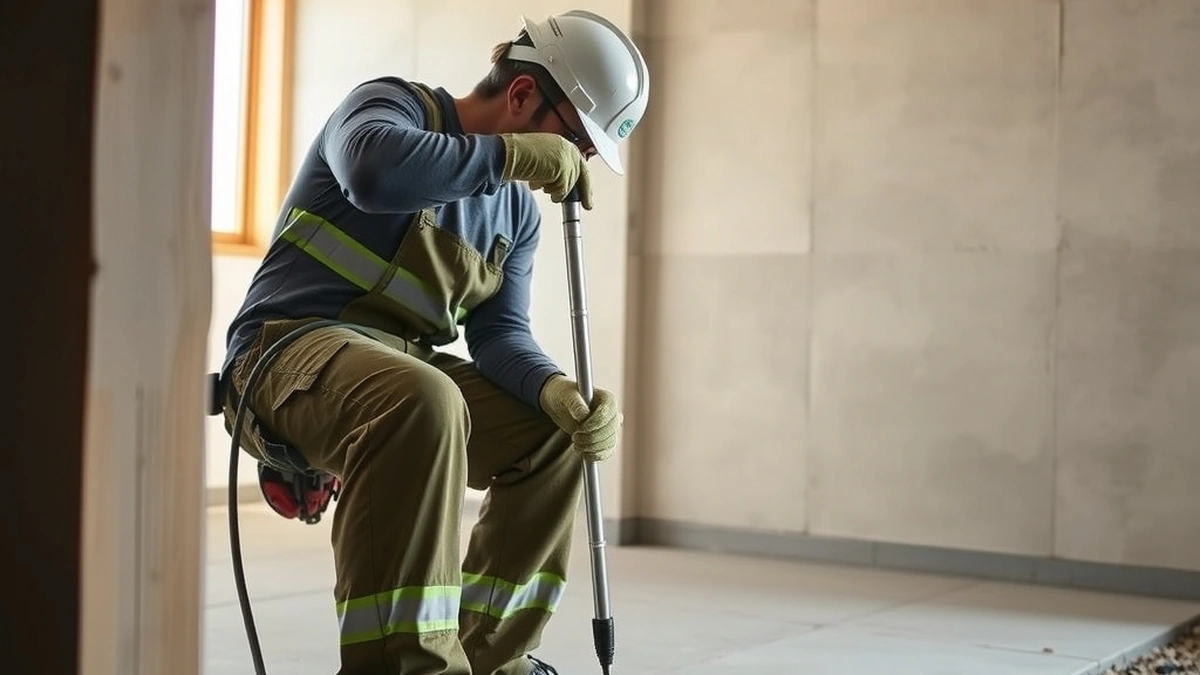
Mudjacking pumps a grout slurry—usually cement, sand, water, and sometimes soil—through holes drilled in the slab. The slurry fills voids and lifts the slab as pressure builds. Holes are typically 1 to 2 inches in diameter and are patched after the lift.
Cost runs $3 to $8 per square foot. For a 500-square-foot section, that is $1,500 to $4,000. Mudjacking is best for minor settlement on stable soils where the slab has not dropped more than a few inches. The material is heavy, which can add load to weak soils, and the cure time is longer than foam. Expected service life is 5 to 15 years, though this is an estimate that depends heavily on drainage and whether the original cause of settlement is fixed.
Polyfoam Injection
Polyfoam lifting injects expanding polyurethane resin through small holes, usually 5/8 inch or smaller. The foam expands, compacts loose soil, and raises the slab. It cures quickly, often within 15 to 30 minutes, and the small holes are less visible after patching.
Cost runs $5 to $15 per square foot. For the same 500-square-foot section, the price is $2,500 to $7,500. Polyfoam works well when access is tight, when fast cure time matters, or when adding weight to the soil is a concern. Like mudjacking, it is a void-filling method, not a deep foundation fix. If the slab is bearing on unstable fill or organic soil, foam may lift temporarily without solving long-term movement.
Push Piers
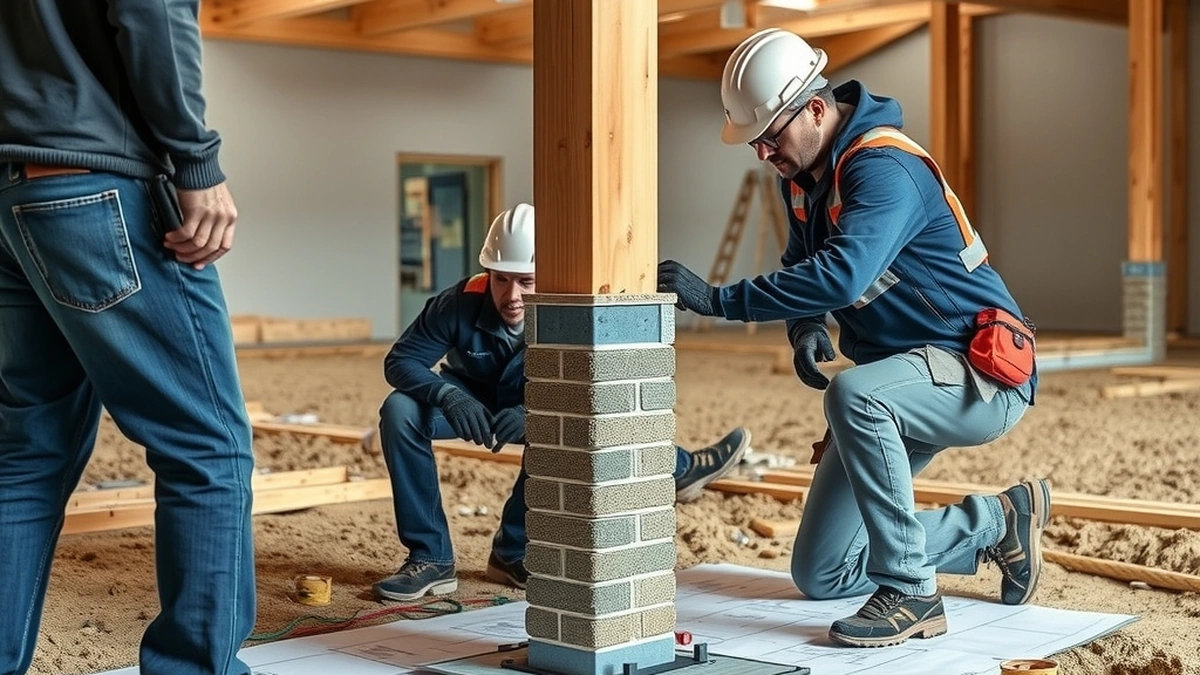
Push piers are steel pipe sections driven hydraulically through the foundation footing until they reach competent bearing soil or bedrock. The structure’s weight is then transferred from the unstable upper soil to the pier. Installation typically requires excavating small sections at each pier location, bracketing the footing, and pushing the pipe down with a hydraulic pump.
Piers cost $1,000 to $3,000 each. A typical residential job uses 4 to 10 piers, putting the total pier job in the range of $6,000 to $30,000. Arithmetic example: six piers at $2,000 each equals $12,000, plus excavation and bracket labor.
Push piers are appropriate when displacement is significant, when the slab must be transferred to deep bearing strata, or when slabjacking cannot reach stable soil. They can also be used to attempt to lift the structure back toward its original position, though full recovery is not guaranteed. Pier warranties are typically lifetime and transferable, subject to a transfer fee of $100 to $500.
Helical Piers
Helical piers are steel shafts with helical plates that are screwed into the soil until torque readings indicate adequate bearing capacity. They are installed with rotary hydraulic equipment and can be loaded immediately after installation. Helical piers are often used in soils where push piers cannot reach bearing depth or where vibration from driving must be minimized.
Helical piers cost $700 to $2,500 each. A job with eight piers at $1,500 each equals $12,000 before excavation and bracket costs. Like push piers, a full helical pier job commonly falls between $6,000 and $30,000 depending on pier count, depth, and site access.
Helical piers suit lighter structures, limited-access sites, and tension applications. They are also used for porch slabs, stoops, and sections where the slab weight alone may not be enough to drive push piers to refusal.
Comparing Methods Side by Side
| Method | Typical Cost | Best For | Limitation |
|---|---|---|---|
| Mudjacking | $3–$8 per sq ft | Minor settlement, stable soil | Heavy material, 5–15 year life |
| Polyfoam | $5–$15 per sq ft | Fast cure, tight access, light soils | Void fill only, not deep bearing |
| Push piers | $1,000–$3,000 each | Significant displacement, deep bearing | Requires footing access, excavation |
| Helical piers | $700–$2,500 each | Limited access, lighter loads | Torque-dependent capacity |
For a 1,000-square-foot garage slab needing moderate lift, mudjacking might cost $3,000 to $8,000 while polyfoam might cost $5,000 to $15,000. If the same slab requires eight push piers at $2,000 each, the pier work alone is $16,000, not including concrete patching or interior finish repairs.
When to Consider Replacement
If more than one-third of the slab has failed structurally, replacement often becomes more economical than repeated lifting. Replacement costs $40,000 to $150,000 depending on size, reinforcement, and site access. Lifting and repair average $4,000 to $15,000, with major structural work reaching $20,000 to $40,000. Restoration typically adds 10 to 25 percent to structural repair costs for finish work such as flooring, drywall, and paint.
Replacement is also the default when the slab is cracked through reinforcement, when soil bearing capacity cannot be reached at reasonable pier depth, or when repeated lifting attempts have failed to stabilize movement.
Choosing a Method
Match the method to the measurement. Minor surface settlement with cracks under 1/8 inch often suits mudjacking or polyfoam. Significant displacement, deep bearing requirements, or structural tilt points to piers. Always confirm depth to bearing soil before accepting a pier count, because pier depth drives both material cost and installation time.
Get an engineer inspection first, compare at least two itemized quotes, and verify that the proposed method addresses the cause of settlement—not just the symptom. Drainage corrections, gutter extensions, and soil grading often matter as much as the lifting method itself.
Next, compare foundation repair cost, pier and beam foundation repair cost, foundation crack repair cost before you commit.
Frequently asked questions
What is the cheapest slab lifting method?
Mudjacking typically costs $3 to $8 per square foot, making it the lowest-cost slab lifting method for minor settlement where soil conditions allow.
How long does mudjacking last?
Mudjacking generally lasts 5 to 15 years, depending on soil stability, drainage, and whether the underlying cause of settlement is corrected.
When should piers be used instead of slabjacking?
Piers are used when the slab has significant displacement, requires transfer to deep bearing soil, or when slabjacking cannot reach stable load-bearing strata.
Are pier warranties transferable?
Pier warranties are typically lifetime and transferable, though a transfer fee of $100 to $500 may apply when the home is sold.
Do I need a permit for slab lifting?
Permit requirements vary by city and county and typically take 1 to 3 weeks to process; check with your local building department before work begins.
How long does an inspection take to schedule?
Engineer inspection lead time is usually 1 to 2 weeks, and an inspection costs $400 to $1,500.
Sources
Some links are affiliate links.If you buy through them we may earn a commission at no extra cost to you. We do not accept payment for rankings. Read the full disclosure.