Helical Tiebacks For Retaining Guide
A numbers-first guide to helical tiebacks for retaining walls, including load basics, cost estimates, alternatives, and when to call an engineer.
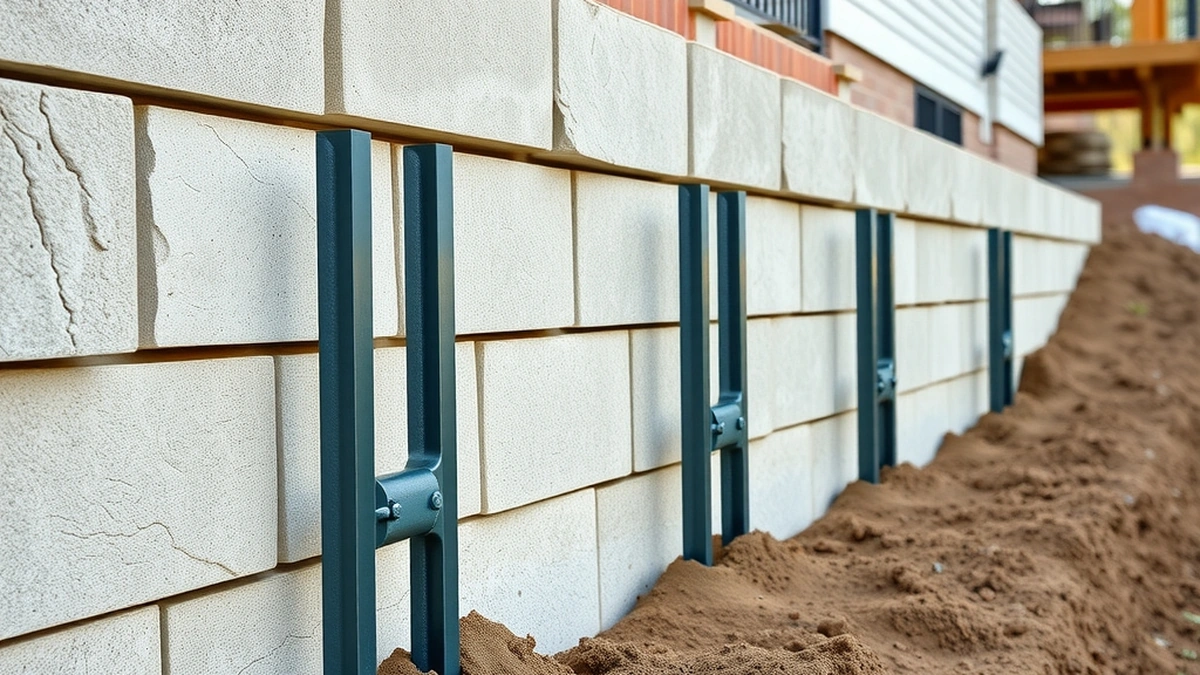
Helical tiebacks are screw-like steel anchors drilled through a retaining wall to resist lateral soil pressure; they typically cost between wall anchors and full wall replacement, and an engineer should verify design loads before installation.
- Typical use
- Retaining walls leaning or bowing under soil pressure
- Engineer inspection
- $400–$1,500
- Wall anchor alternative (each)
- $500–$1,500
- Helical pier alternative (each)
- $700–$2,500
- Full wall replacement
- $40,000–$150,000
Some links on this page are affiliate links.If you buy through them we may earn a commission at no extra cost to you. We do not accept payment for rankings. Read the full disclosure.
Helical tiebacks are steel anchors used to stabilize retaining walls that are leaning, bowing, or cracking under lateral soil pressure. They are installed by screwing helical plates into the soil behind the wall and connecting the shaft to the wall face with a bearing plate and nut. This article covers how they work, when they apply, what they cost relative to alternatives, and when full replacement is the more appropriate path.
What Helical Tiebacks Do
Retaining walls hold back soil. When the soil pushes harder than the wall can resist—because of poor drainage, added surcharge loads, or wall deterioration—the wall can tilt or bow inward. Helical tiebacks counteract that pressure by transferring load from the wall into deeper, more stable soil.
A helical tieback looks like a large steel screw. A contractor drills it through the wall at a downward angle, usually between 10 and 25 degrees, until it reaches the required torque in the bearing soil. A steel plate is then bolted to the wall face, and the tieback is tensioned and locked in place. The goal is to stop movement and, in some cases, pull the wall back toward its original position.
This is not a cosmetic crack repair. If a crack is narrower than 1/16 inch, it is typically cosmetic. If it is wider than 1/8 inch, it warrants monitoring. Lateral wall movement beyond roughly 2 inches often moves the conversation toward replacement rather than reinforcement.
When Tiebacks Are Appropriate
Helical tiebacks fit situations where:
- The wall is structurally sound enough to accept anchor loads.
- There is room behind the wall to drill at an angle.
- The failure is caused by lateral earth pressure, not by foundation settlement at the wall base.
- Full replacement is not justified by the extent of damage.
They are less suitable when the wall is crumbling, when the footing has settled significantly, or when there is no accessible soil zone behind the wall. In those cases, a structural engineer may recommend wall anchors, reconstruction, or replacement.
Measurement First
Before any tieback design, measure the wall:
- Crack width at the widest point, recorded in inches.
- Wall lean or bow, measured from a plumb line or straightedge, recorded in inches.
- Wall height and length, in feet.
- Soil conditions and drainage status behind the wall.
These numbers determine the number of tiebacks, their spacing, depth, and required torque. An engineer should specify the layout. An inspection typically costs $400–$1,500 and usually takes 1–2 weeks to schedule.
Cost Estimates and Comparisons
Helical tieback pricing is project-specific because it depends on depth, soil conditions, tieback count, and engineering fees. The table below places tiebacks alongside related repair methods using published estimate ranges.
| Method | Typical Cost Basis | Estimate Range |
|---|---|---|
| Engineer inspection | Per visit | $400–$1,500 |
| Wall anchor | Each | $500–$1,500 |
| Carbon fiber strap | Each | $400–$1,200 |
| Helical pier | Each | $700–$2,500 |
| Push pier | Each | $1,000–$3,000 |
| Pier job | Whole project | $6,000–$30,000 |
| Average foundation repair | Whole project | $4,000–$15,000 |
| Major structural repair | Whole project | $20,000–$40,000 |
| Wall replacement | Whole project | $40,000–$150,000 |
Tiebacks often fall between wall anchors and full replacement in total project cost. If a retaining wall needs eight tiebacks and engineering, materials, and installation run in the range of a major structural repair, the total could land near $20,000–$40,000. That is only an estimate; actual quotes depend on local labor rates and site access.
For comparison, restoring a wall with reinforcement typically costs 10–25 percent of full structural replacement. If replacement is priced at $40,000–$150,000, a restoration approach might cost roughly $4,000–$37,500 before engineering and permitting. These ranges overlap, which is why site-specific measurement matters more than square-foot pricing.
Alternatives to Tiebacks
Wall anchors cost $500–$1,500 each and use a steel rod connected to an earth anchor buried behind the wall. They require accessible soil and working room outside the wall footprint. Helical tiebacks are drilled at an angle and can work where vertical anchor placement is difficult, but both systems resist lateral pressure.
Carbon fiber straps cost $400–$1,200 each and are epoxied to the wall face. They are better suited to basement walls with minor bowing than to tall retaining walls subject to heavy earth pressure.
If more than about 33 percent of the wall has failed structurally, replacement is usually the more durable option. Replacement costs $40,000–$150,000 depending on wall size, materials, and site conditions. Tiebacks do not fix a wall that has already lost most of its structural capacity.
Installation Overview
A typical helical tieback project follows this sequence:
- Engineer inspects the wall and specifies tieback locations, angles, depths, and torque requirements.
- Contractor marks drill locations and clears the wall face.
- A helical anchor is drilled through the wall into the soil behind it.
- Torque is monitored to confirm the anchor has reached bearing capacity.
- A bearing plate is installed on the wall face, and the tieback is connected and tensioned.
- Caps or finishes are applied over the plate, and drainage is checked.
Permits vary by city and county and typically take 1–3 weeks. Inspection lead time is usually 1–2 weeks. Warranty transfer fees, where applicable, run $100–$500. Pier warranties are often advertised as lifetime and transferable, but tieback warranty terms should be confirmed in writing before work begins.
Load and Arithmetic Example
Suppose an engineer determines that a 40-foot retaining wall needs six helical tiebacks spaced 8 feet apart. If each tieback assembly, including labor and engineering allocation, is estimated at $3,000–$6,000, the subtotal is:
6 tiebacks × $3,000 = $18,000
6 tiebacks × $6,000 = $36,000
Add an engineer inspection at $400–$1,500 and permitting costs, and the project could range from roughly $18,400 to $37,500. This is an illustrative example, not a quote. Actual pricing depends on soil reports, tieback depth, and regional labor rates.
For load context, tiebacks are designed to resist the lateral earth pressure acting on the wall. That pressure depends on wall height, soil type, moisture content, and surcharge loads such as driveways or structures above the wall. An engineer calculates the required resisting force and specifies tieback capacity accordingly. Contractors should not guess at spacing or depth.
Drainage and Maintenance
Water behind a retaining wall increases lateral pressure through hydrostatic load. Tiebacks do not fix drainage problems. Before or during installation, check for:
- Weep holes or drainage outlets.
- Grading that directs surface water away from the wall.
- Gutters and downspouts that do not discharge behind the wall.
If drainage is poor, tiebacks may hold the wall temporarily while pressure continues to build. Addressing drainage is part of a complete repair plan, not an optional add-on.
When to Call a Structural Engineer
Retaining wall repair is not a DIY measurement job. Call an engineer when:
- The wall is leaning or bowing more than 2 inches.
- Cracks exceed 1/8 inch and are growing.
- The wall supports a driveway, patio, or structure above it.
- You are comparing tiebacks against replacement.
An inspection costs $400–$1,500 and typically takes 1–2 weeks to schedule. That fee buys a load calculation and a repair specification, which protects you from overbuilding or underbuilding the fix.
Bottom Line
Helical tiebacks are a measured, structural response to retaining walls moving under soil pressure. They cost more than wall anchors or carbon fiber straps but less than full wall replacement in most cases. Start with crack width and wall displacement, get an engineer’s load specification, and compare the tieback estimate against replacement at $40,000–$150,000 before signing a contract.
Next, compare foundation repair cost, pier and beam foundation repair cost, foundation crack repair cost before you commit.
Frequently asked questions
What are helical tiebacks?
Helical tiebacks are steel shafts with helical plates that are screwed into soil behind a retaining wall and connected to the wall face to resist inward movement.
When should a retaining wall be replaced instead of tied back?
Replacement is generally considered when more than about one-third of the wall has failed structurally or when movement exceeds safe repair limits.
Do helical tiebacks require a permit?
Permit requirements vary by city and county; typically 1–3 weeks, so check with the local building department before starting work.
How much does an engineer inspection cost?
A structural engineer inspection typically costs $400–$1,500 and should precede tieback design.
Are tieback warranties transferable?
Pier warranties are often listed as lifetime and transferable, but tieback warranty terms vary by contractor and should be confirmed in writing.
How do tiebacks compare to wall anchors?
Wall anchors cost $500–$1,500 each and require accessible soil behind the wall, while helical tiebacks are drilled at an angle and may fit tighter sites.
Sources
Some links are affiliate links.If you buy through them we may earn a commission at no extra cost to you. We do not accept payment for rankings. Read the full disclosure.