Drainage Repair Around a Foundation: Costs and Methods
How drainage repair around a foundation works, what it costs, and when to involve a structural engineer.
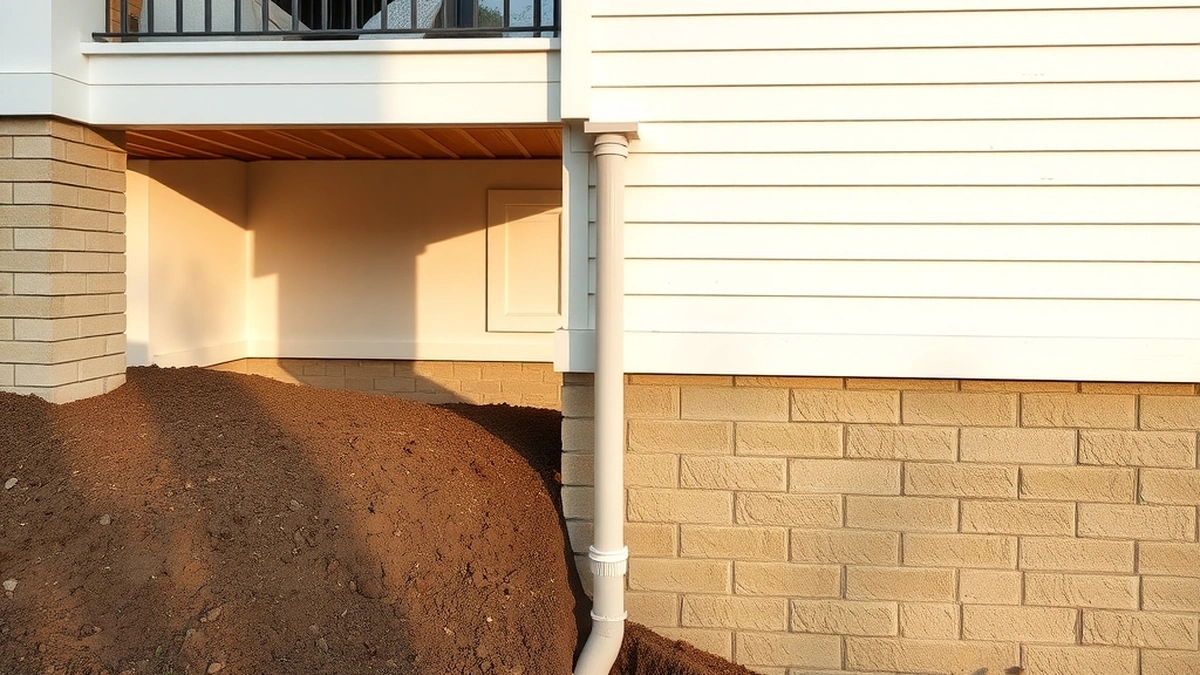
Drainage repair around a foundation means moving water away from the slab or crawl space using grading, gutters, downspouts, and drains before soil movement cracks the concrete.
- Typical scope
- Grading, gutters, downspout extensions, surface drains, French drains
- Engineer inspection
- $400–$1,500
- Average foundation repair
- $4,000–$15,000
- Inspection lead time
- 1–2 weeks
Some links on this page are affiliate links.If you buy through them we may earn a commission at no extra cost to you. We do not accept payment for rankings. Read the full disclosure.
Drainage Repair Around a Foundation: Costs and Methods
Drainage repair around a foundation means moving water away from the slab, basement walls, or crawl space so soil moisture stays stable. The work usually involves regrading soil, extending downspouts, adding surface drains, or installing a French drain. These steps cost far less than structural repairs and should be completed before crack filling or pier installation.
Why Water Controls Foundation Movement
Soil around a foundation expands when wet and shrinks when dry. That movement pushes on footings and slabs, which causes cracks, sticking doors, and uneven floors. Keeping water at a consistent distance from the foundation limits those cycles. The goal is not to make the soil bone-dry; it is to prevent repeated wetting and drying near the footing.
A simple test is to walk the perimeter during a rainstorm. Water should flow away from the house, not pool against the wall. If downspouts dump water within two feet of the foundation, that volume concentrates in the backfill zone and increases hydrostatic pressure on the wall.
Measure First: Slope and Distance
Start with measurements, not products. Use a 4-foot level and a tape measure to check the grade within ten feet of the foundation. Soil should drop about six inches over that ten-foot run, which is a 5 percent slope. If the ground is flat or slopes toward the house, water runs back to the wall.
Measure downspout discharge points. Water exiting within two to three feet of the foundation should be moved farther out. A downspout extension or splash block is the cheapest fix. Extensions typically run $10–$50 each at retail, while professional installation of rigid drainage pipe adds labor and material costs.
Check for low spots where water sits after rain. Standing water within five feet of the foundation is a priority. Note the location, depth, and how long it takes to drain. These numbers help a contractor or engineer size a drain line.
Common Drainage Methods
Surface grading is the first step. Adding clean fill soil next to the foundation and sloping it away costs roughly $1–$3 per square foot for labor and material, depending on access and soil type. For a 100-square-foot area, that is $100–$300. Do not cover weep holes or bury siding; keep at least four to six inches of clearance between soil and exterior cladding.
Gutters and downspouts manage roof runoff. A typical 1,500-square-foot roof sheds hundreds of gallons during a moderate storm. If gutters are missing or clogged, water sheets down the foundation wall. Cleaning gutters costs $100–$250 for an average home; installing new gutters runs several hundred to a few thousand dollars by linear foot.
Downspout extensions move discharge away from the wall. Flexible plastic extensions cost $10–$30 each. Rigid PVC or metal extensions installed below grade cost more but last longer. For four downspouts at $25 each, materials are about $100, plus labor if trenched.
French drains collect subsurface water and carry it to a lower exit point or dry well. A basic French drain runs $15–$30 per linear foot installed. For 100 linear feet around a foundation, that is $1,500–$3,000. The trench usually sits 18–24 inches deep and 12 inches wide, lined with filter fabric and gravel around a perforated pipe.
Surface drains or catch basins work in low yards where water concentrates. Each basin connects to solid pipe that outlets to daylight or a storm drain. Costs vary by pipe length and outlet distance, so get a site-specific estimate.
| Method | Typical Material Cost | Typical Installed Cost | Best For |
|---|---|---|---|
| Regrading | $0.50–$1.50 per sq ft | $1–$3 per sq ft | Flat or negative slope within 10 ft |
| Downspout extension | $10–$50 each | $25–$100 each | Roof runoff near wall |
| French drain | $8–$15 per linear ft | $15–$30 per linear ft | Subsurface water along foundation |
| Surface drain / catch basin | $50–$150 each | $200–$600 each | Concentrated yard low spots |
These are estimates. Actual prices depend on local labor rates, soil conditions, and whether concrete or landscaping must be removed and replaced.
When Drainage Is Not Enough
Drainage repair stops water-related movement. It does not lift a settled slab or close a structural crack. If you already see cracks wider than 1/8 inch, stair-step cracks in brick, or walls leaning more than 2 inches, drainage work should accompany structural repair, not replace it.
For slab settlement, options include mudjacking at $3–$8 per square foot or poly foam lifting at $5–$15 per square foot. A 200-square-foot section lifted with poly foam at $10 per square foot costs about $2,000. For deeper bearing issues, push piers run $1,000–$3,000 each and helical piers run $700–$2,500 each. A full pier job often lands between $6,000 and $30,000. See /push-pier-cost/ and /helical-pier-cost/ for detail.
For crawl spaces, encapsulation runs $3–$8 per square foot, or $4,000–$15,000 for a full job. This controls ground moisture but is separate from exterior drainage. See /crawl-space-encapsulation-cost/ if your crawl space has standing water or high humidity.
If foundation damage is severe and repair costs approach one-third of replacement value, replacement may be considered. Replacement runs $40,000–$150,000, while average repairs run $4,000–$15,000 and major repairs run $20,000–$40,000. Those are broad ranges; an engineer’s inspection at $400–$1,500 gives a specific scope.
The Inspection Step
Before spending on drainage or structural work, schedule an inspection. A structural engineer charges $400–$1,500 and typically has a lead time of 1–2 weeks. The report identifies whether the problem is water, soil bearing, or construction detail. That prevents paying for a French drain when the real issue is a failed footing.
Permits vary by city and county and typically take 1–3 weeks. Grading near property lines, tying into storm sewers, or disturbing more than a threshold amount of soil may require approval. Check with your local building department before trenching.
Maintenance After Repair
Drainage systems need upkeep. Clean gutters twice a year. Check downspout extensions after storms to confirm they are still connected and pointing away. Inspect the grade once a year; soil settles, and a 5 percent slope can flatten over time. Keep mulch and plant beds below the siding line and avoid irrigating directly against the foundation.
If you install a French drain, check the outlet after heavy rain. A clogged outlet sends water back toward the foundation. Rodding or jetting the line every few years prevents blockage.
Getting Started
Start with a walk-around during or after rain. Measure the slope within ten feet of the wall. Count downspouts and note where water exits. Fix the cheapest items first: regrade soil, add extensions, and clean gutters. If water still pools or cracks continue to widen, bring in an engineer before spending on buried drains or piers.
Drainage repair around a foundation is preventive maintenance that protects more expensive structural work. It is measured in slope, distance, and gallons moved, not in fear. For related cost detail, see /foundation-repair-cost/ and /foundation-crack-repair-cost/.
Next, compare foundation repair cost, pier and beam foundation repair cost, foundation crack repair cost before you commit.
Frequently asked questions
What is drainage repair around a foundation?
It is the work of directing surface and subsurface water away from foundation walls and footings so soil moisture stays stable and does not cause settlement or heave.
How much does drainage repair cost?
Simple grading and downspout work often runs a few hundred dollars, while French drains and engineered systems cost more; full foundation repairs average $4,000–$15,000.
When should I call an engineer?
Call an engineer if you see cracks wider than 1/8 inch, doors that stick, or floors that slope; inspections cost $400–$1,500 and take 1–2 weeks to schedule.
Does drainage repair fix existing cracks?
No. Drainage stops further water-related movement, but existing cracks and settled sections need separate crack repair or lifting work.
Do I need a permit?
Permit rules vary by city and county and typically take 1–3 weeks; check your local building department before grading or drain work.
How long does drainage work last?
Surface grading and downspout extensions last indefinitely with maintenance; buried drain lines can clog and may need cleaning or replacement over years.
Sources
Some links are affiliate links.If you buy through them we may earn a commission at no extra cost to you. We do not accept payment for rankings. Read the full disclosure.