Crawl Space Dehumidifier Sizing for Moisture Control
How to size a crawl space dehumidifier by square footage, moisture load, and ventilation, with cost context and installation factors.
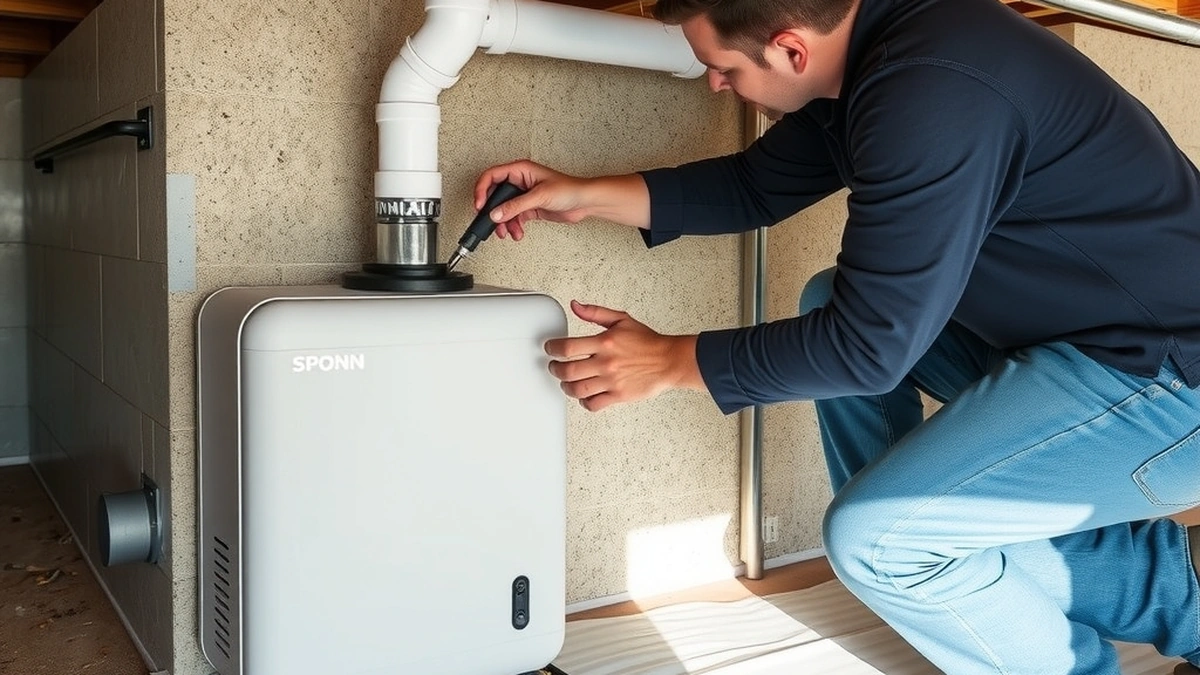
Size a crawl space dehumidifier by crawl space square footage and moisture load; most residential crawl spaces need 30–70 pints per day at AHAM conditions.
- Typical capacity range
- 30–70 pints/day (AHAM)
- Small crawl space (<1,000 sq ft)
- 30–50 pints/day
- Large crawl space (2,000+ sq ft)
- 70+ pints/day or multiple units
- Encapsulation job cost
- $4,000–$15,000
- Engineer inspection
- $400–$1,500
Some links on this page are affiliate links.If you buy through them we may earn a commission at no extra cost to you. We do not accept payment for rankings. Read the full disclosure.
Crawl space dehumidifier sizing starts with two numbers: crawl space square footage and daily moisture removal in pints. A unit that is too small runs constantly and never reaches the target humidity; a unit that is too large short-cycles and wastes electricity. This guide explains how to measure the space, estimate the load, and match the equipment to the conditions.
Measure the Crawl Space First
Measure the length and width of the crawl space in feet, then multiply to get square footage. A crawl space measuring 30 feet by 40 feet equals 1,200 square feet. Ceiling height matters less than floor area for dehumidifier sizing, but note it anyway because volume affects how quickly the unit can turn over the air.
Next, classify the moisture condition. A dry, encapsulated crawl space with a sealed vapor barrier generates less moisture than a vented crawl space with exposed soil and standing water after rain. If you see condensation on foundation walls or joists, treat the space as high-moisture even if the square footage is modest.
Use Pints Per Day as the Sizing Metric
Dehumidifiers are rated in pints of water removed per day under AHAM conditions, typically 80°F and 60% relative humidity. Crawl spaces are usually cooler, often 55–65°F, so real-world removal is lower than the nameplate rating. Treat the published number as a starting point, not a guarantee.
As a general estimate:
- Under 1,000 square feet: 30–50 pints per day
- 1,000 to 2,000 square feet: 50–70 pints per day
- Over 2,000 square feet: 70+ pints per day, or multiple units
These are estimates. A very wet, vented crawl space may need the next size up, while a fully encapsulated space with a sealed vapor barrier may perform well with the next size down.
Account for Encapsulation and Ventilation
Encapsulation changes the load. Sealing the crawl space with a vapor barrier on the floor and walls, plus sealing vents, reduces the amount of humid outside air entering the space. That lowers the moisture load and can allow a smaller dehumidifier to maintain 50–55% relative humidity.
Crawl space encapsulation costs roughly $3–$8 per square foot, or $4,000–$15,000 per job depending on materials, drainage, and site access. If you are already budgeting for encapsulation, factor the dehumidifier into the same project. A sealed crawl space without a dehumidifier can still trap moisture, so the two systems are often specified together.
Vented crawl spaces introduce outdoor humidity in summer, which raises the load. In those cases, size for the wet season rather than the annual average.
Calculate the Moisture Load
You can estimate daily moisture load with a simple arithmetic check. If the crawl space is 1,500 square feet and moderately damp, a common rule of thumb is roughly 0.03 to 0.05 pints per square foot per day under active moisture conditions.
1,500 sq ft × 0.04 pints = 60 pints per day
That calculation points to a 70-pint unit rather than a 50-pint unit. If the same space is encapsulated and dry, the load might drop to 0.02 pints per square foot:
1,500 sq ft × 0.02 pints = 30 pints per day
In that scenario, a 30–50 pint unit may be sufficient. These figures are estimates; use a hygrometer to verify actual relative humidity after installation.
Choose Placement and Drainage
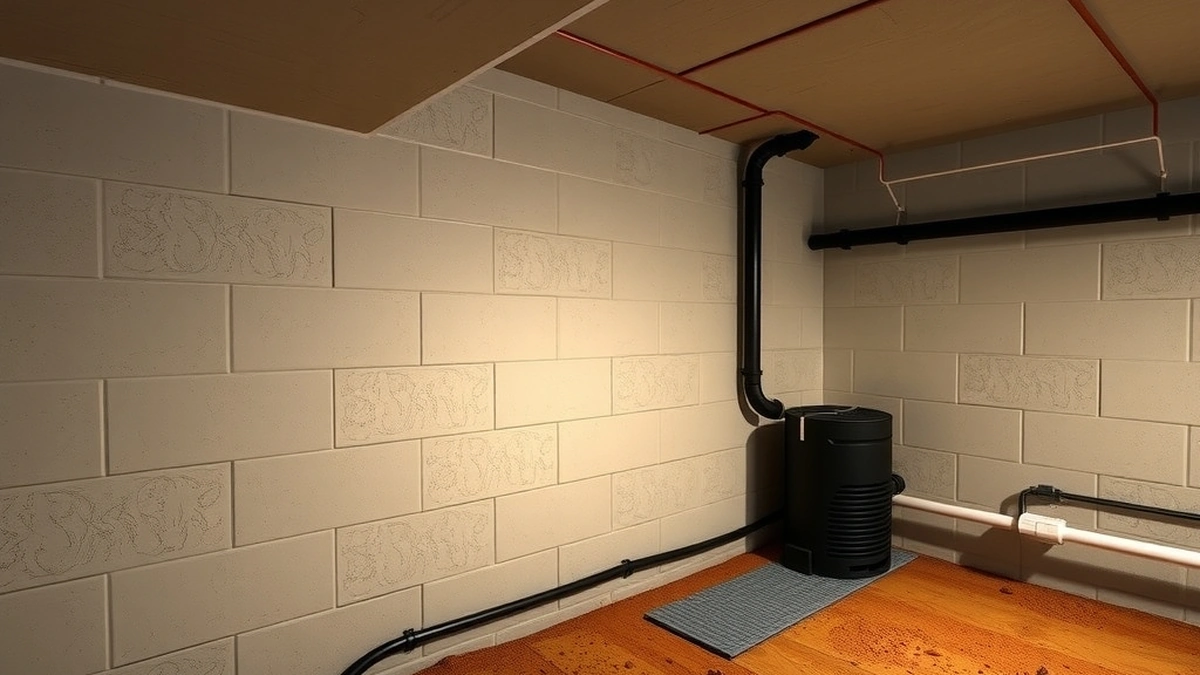
Place the dehumidifier on a level surface, ideally on a concrete block or stand above the vapor barrier, with at least 6–12 inches of clearance around the air intake and discharge. Avoid corners where airflow stagnates.
For drainage, gravity discharge to a sump pit or exterior grade is best because it requires no maintenance. If gravity is not possible, use a condensate pump with a check valve. Confirm the pump’s lift height matches the vertical distance to the drain line; undersized pumps fail and cause overflow.
Set the humidistat to maintain 50–55% relative humidity. Lower settings do not protect the foundation better and only increase runtime and energy use.
Integrate With Foundation Repairs
Moisture management is one part of crawl space maintenance. If you also see foundation cracks, sticking doors, or sloping floors, address the structural issue before relying on a dehumidifier to solve the problem. Foundation repairs and crawl space encapsulation are separate scopes, though they are sometimes done in the same project.
For cost context, common foundation repair items include:
- Push pier: $1,000–$3,000 each
- Helical pier: $700–$2,500 each
- Full pier job: $6,000–$30,000
- Carbon fiber strap: $400–$1,200
- Wall anchor: $500–$1,500 each
An engineer inspection costs $400–$1,500 and typically has a lead time of 1–2 weeks. Permits vary by city and county and typically take 1–3 weeks. These figures are estimates and do not include the dehumidifier itself.
If your crawl space is part of a pier-and-beam foundation, review the related cost guide at /pier-and-beam-foundation-repair-cost/. For slab-related moisture concerns, see /mudjacking-cost/. For general foundation repair pricing, see /foundation-repair-cost/.
Verify After Installation
Run the dehumidifier continuously for the first 72 hours, then check relative humidity at multiple points in the crawl space. If readings stay above 60% in corners or far from the unit, add a second unit or improve air circulation with a fan. If the unit short-cycles—running for 10 minutes then shutting off—raise the humidistat target or confirm the space is not smaller than the unit’s rating.
Check the condensate line weekly during the first month. A clogged drain shuts the unit down or causes overflow, which defeats the purpose of moisture control.
Size Before You Buy
Crawl space dehumidifier sizing depends on measured square footage, moisture condition, and whether the space is encapsulated. Start with the floor area, adjust for encapsulation and ventilation, and select a pints-per-day rating that matches the load. Treat all capacity and cost figures as estimates, and verify performance with a hygrometer after installation. If foundation movement is present, get an engineer inspection before spending on moisture equipment.
Next, compare foundation repair cost, pier and beam foundation repair cost, foundation crack repair cost before you commit.
Frequently asked questions
What size dehumidifier do I need for my crawl space?
Match the unit’s pints-per-day rating to your crawl space square footage and moisture conditions; a 1,500-square-foot crawl space often uses a 50-pint unit as a starting point.
Does encapsulation change dehumidifier sizing?
Yes. Sealed crawl spaces hold less outside air, so a properly encapsulated space may need a smaller unit than a vented space of the same size.
Can one dehumidifier handle a large crawl space?
It depends on the layout and capacity; very large or compartmentalized crawl spaces may need two units or ducted distribution to reach all corners.
How much does crawl space encapsulation cost?
Encapsulation runs about $3–$8 per square foot, or $4,000–$15,000 per job, depending on materials and site conditions.
Should I get an engineer inspection before installing a dehumidifier?
An inspection is not required for a dehumidifier alone, but costs $400–$1,500 if you suspect foundation movement or structural issues alongside moisture.
What humidity level should a crawl space maintain?
Target 50–55% relative humidity; sustained levels above 60% support mold growth and wood decay, while levels below 30% can dry out wood framing.
Sources
Some links are affiliate links.If you buy through them we may earn a commission at no extra cost to you. We do not accept payment for rankings. Read the full disclosure.