Cracks in Brick Veneer: Causes and Repair Costs
How to measure cracks in brick veneer, when they indicate foundation problems, and what repairs typically cost.
Most cracks in brick veneer are cosmetic, but cracks wider than 1/8 inch or tied to foundation movement need inspection and possibly piers.
- Cosmetic crack limit
- 1/16 inch
- Monitor crack width
- 1/8 inch
- Typical pier job
- $6,000–$30,000
- Engineer inspection
- $400–$1,500
Some links on this page are affiliate links.If you buy through them we may earn a commission at no extra cost to you. We do not accept payment for rankings. Read the full disclosure.
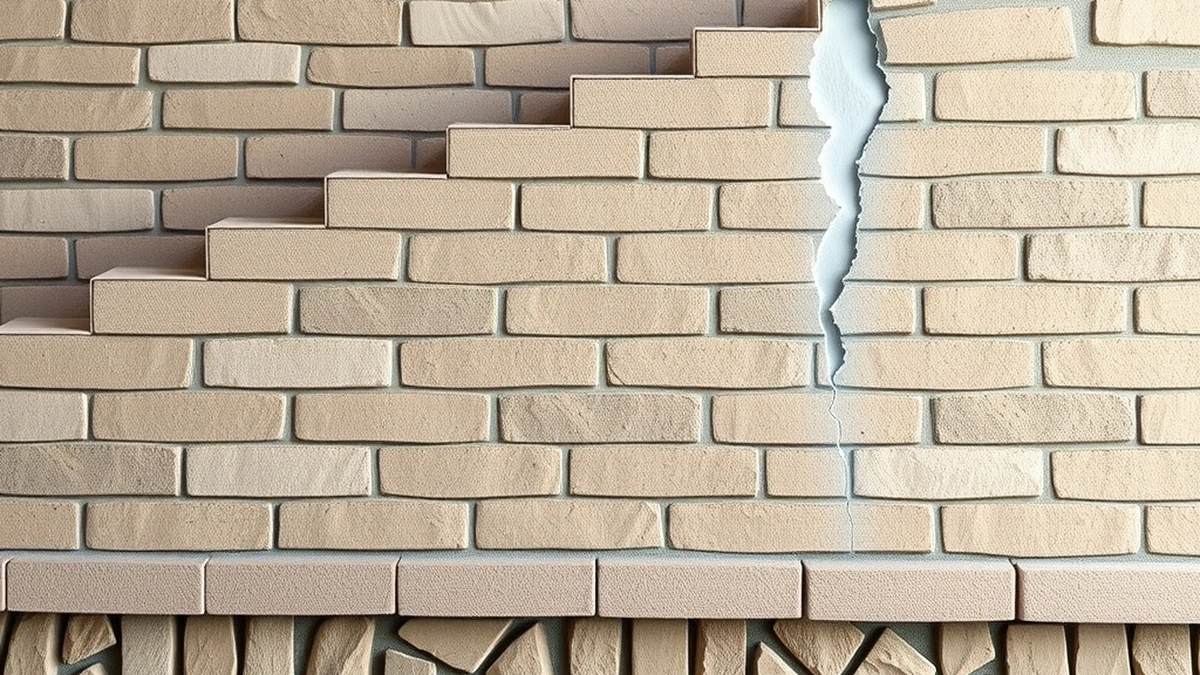
Cracks in brick veneer are common, and most are cosmetic rather than structural. A crack narrower than 1/16 inch usually reflects normal material movement, while cracks at or above 1/8 inch warrant closer measurement. If the crack runs diagonally, follows mortar joints in a stair-step pattern, or aligns with interior drywall cracks, the cause is often foundation settlement rather than the brick itself.
What Brick Veneer Cracks Mean
Brick veneer is a non-structural curtain wall attached to the wood or steel frame behind it. Because brick is rigid and brittle, it cracks when the frame or foundation shifts beneath it. Common causes include differential settlement, soil shrinkage, poor drainage, and thermal expansion. A vertical crack near a window or door corner is frequently cosmetic. A stair-step crack that follows the mortar bed joints and continues across multiple bricks suggests the wall support underneath has moved.
The key distinction is not the material but the movement. Measure first, then decide whether the crack needs cosmetic repair, monitoring, or structural intervention.
Measure the Crack First
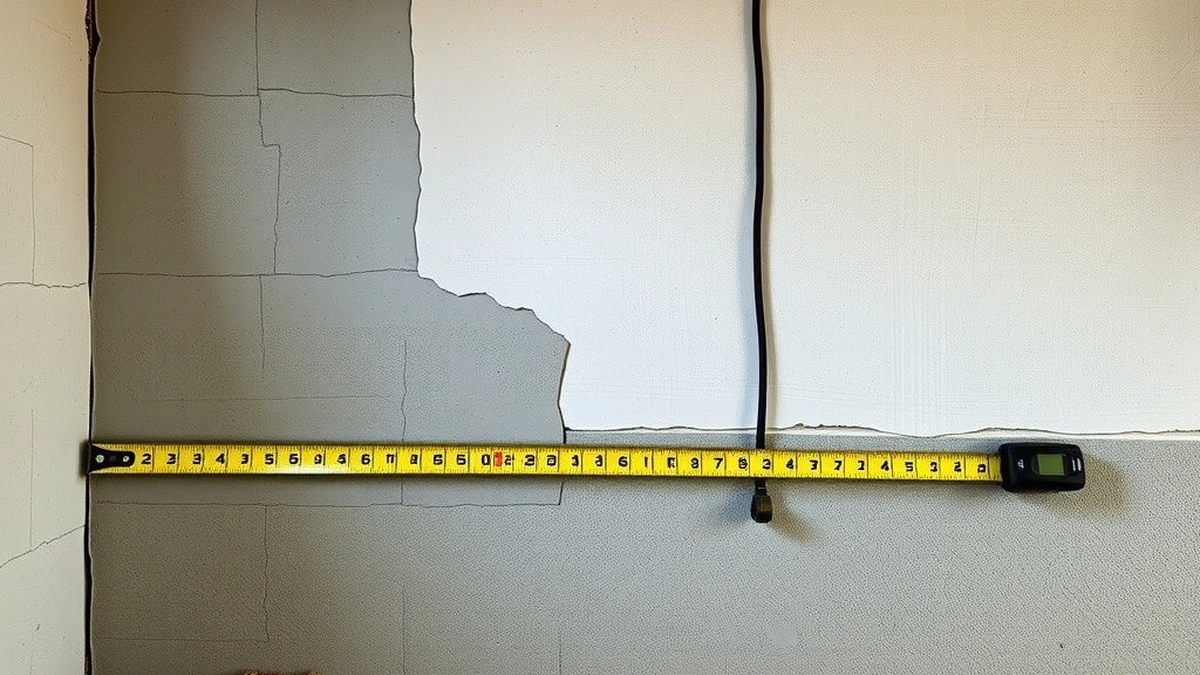
Before discussing repair methods, record the crack width and displacement. Use a crack gauge or feeler gauge to measure the widest point.
- Under 1/16 inch: generally cosmetic; seal and monitor.
- 1/8 inch: watch threshold; measure again in 30 to 60 days.
- Over 1/8 inch with active movement: consult a structural engineer.
Also note crack length, direction, and whether the two sides are displaced in plane or out of plane. Wall movement beyond 2 inches at any point is a serious condition that usually requires underpinning or wall stabilization, not just surface patching.
When Cracks Signal Foundation Problems
Brick veneer cracks become a foundation issue when they accompany other symptoms: sticking doors, sloping floors, gaps between walls and ceilings, or cracks in interior drywall that mirror the exterior pattern. Settlement is often uneven, so one corner of the house may drop while the rest stays level. That differential movement stresses the brick veneer and produces diagonal or stair-step cracking.
An engineer inspection costs $400–$1,500 and typically has a lead time of 1–2 weeks. The inspection determines whether the active cause is still ongoing or whether the movement has stabilized. Permits vary by city and county and typically take 1–3 weeks to approve if structural work is required.
Repair Options and Costs
Repair cost follows the diagnosis, not the crack width alone. Cosmetic repointing and sealant are inexpensive but do not stop structural movement. If the foundation is settling, piers transfer the load to deeper bearing soil.
Common repair methods include:
- Cosmetic masonry repair – repointing mortar and sealing cracks. Best for cracks under 1/16 inch with no active movement.
- Push piers – steel piers driven to bearing depth. Cost is $1,000–$3,000 each. A typical job of four to six piers runs roughly $6,000–$18,000 before finishing and masonry repair.
- Helical piers – screw-anchored piers used when soil conditions or access limit push pier installation. Cost is $700–$2,500 each.
- Full pier job – total project range is $6,000–$30,000 depending on pier count, depth to bearing, and site access.
Example arithmetic: if an engineer recommends five push piers at $2,000 each, the pier material and installation subtotal is 5 × $2,000 = $10,000. Adding masonry repair, engineering, and permits can push the total toward the upper end of the $6,000–$30,000 range.
Pier warranties are typically lifetime and transferable. A warranty transfer fee runs $100–$500 if you sell the home.
Interior and Exterior Wall Stabilization
If cracks appear in the foundation wall or basement wall behind the brick veneer, lateral support may be needed. Carbon fiber straps cost $400–$1,200 each and are used for minor wall bowing. Wall anchors cost $500–$1,500 each and are used when soil pressure pushes a basement wall inward. These repairs address the structural wall, not the brick veneer finish, so any brick crack repair happens after the wall is stabilized.
When Replacement Becomes Necessary
Replacement is rarely the first option for brick veneer cracks. It becomes relevant when more than one-third of a wall or foundation section has failed or when repeated repairs no longer stop movement. Full foundation replacement ranges from $40,000–$150,000. Restoration work, such as selective brick replacement and repointing, typically costs 10–25 percent of the structural repair value. Before choosing replacement, confirm that underpinning or drainage correction cannot stabilize the existing structure.
Cost Context and Related Repairs
Foundation repair projects average $4,000–$15,000, with major repairs reaching $20,000–$40,000. If the brick veneer crack is tied to a slab or crawl space issue, related costs include slab lifting at $3–$12 per square foot, mudjacking at $3–$8 per square foot, and poly foam injection at $5–$15 per square foot. Crawl space encapsulation costs $3–$8 per square foot, or $4,000–$15,000 per job. These numbers are estimates and vary by region, access, and the extent of damage.
For more detail on specific systems, see the cost guides for push piers, helical piers, carbon fiber repair, and wall anchors linked throughout the site.
What to Do Next
Start by measuring the crack width and noting the date. Take photos with a ruler or crack gauge for scale. If the crack is under 1/16 inch and stable, schedule a recheck in two months. If it is at or above 1/8 inch, growing, or paired with interior symptoms, book an engineer inspection. Use the inspection report to choose between cosmetic masonry repair and structural underpinning, then request itemized quotes that list pier count, depth to bearing, and unit price before signing any contract.
Next, compare foundation repair cost, pier and beam foundation repair cost, foundation crack repair cost before you commit.
Frequently asked questions
Are all brick veneer cracks structural?
No. Hairline cracks under 1/16 inch are usually cosmetic, while wider or stair-step cracks may indicate foundation movement.
When should I call an engineer?
Call an engineer if cracks exceed 1/8 inch, keep growing, or appear with sticking doors and uneven floors.
What does pier repair cost?
Push piers run $1,000–$3,000 each and helical piers $700–$2,500 each, with full jobs typically $6,000–$30,000.
Can I seal brick cracks myself?
Small cosmetic cracks can be repointed or sealed, but structural movement needs a foundation diagnosis before cosmetic patching.
How long does an inspection take?
Inspection lead time is typically 1–2 weeks, and permits vary by city and county, usually 1–3 weeks.
Are pier warranties transferable?
Yes, pier warranties are typically lifetime and transferable, with a transfer fee of $100–$500.
Sources
Some links are affiliate links.If you buy through them we may earn a commission at no extra cost to you. We do not accept payment for rankings. Read the full disclosure.